
The Intense Rivalry of Kolkata Football
Kolkata’s football culture is characterized by one of the most intense rivalries in the sport, particularly the clash between Mohun Bagan and East Bengal. These matches draw crowds exceeding 50,000 and create a fervor that captivates the city’s football enthusiasts.
The Influence of Football Beyond the Game
Football in Kolkata is distinct from other Indian regions with its rich history and significant impact on the city’s social fabric. As football analyst Debanjan Banerjee points out, the rivalry has fostered a unique intellectual engagement around the sport. Unlike other Indian cities, where football might be one of many interests, Kolkata fans live and breathe football throughout the year.
“The longstanding rivalry has created not just a binary structure for fandom, but an intellectual capacity for football that is of a different order to the rest of India,” Banerjee explained. This depth of understanding shapes how residents perceive politics, art, and history, making the sport a thread that connects generations.
Argentina’s Influence on Kolkata Football Fandom
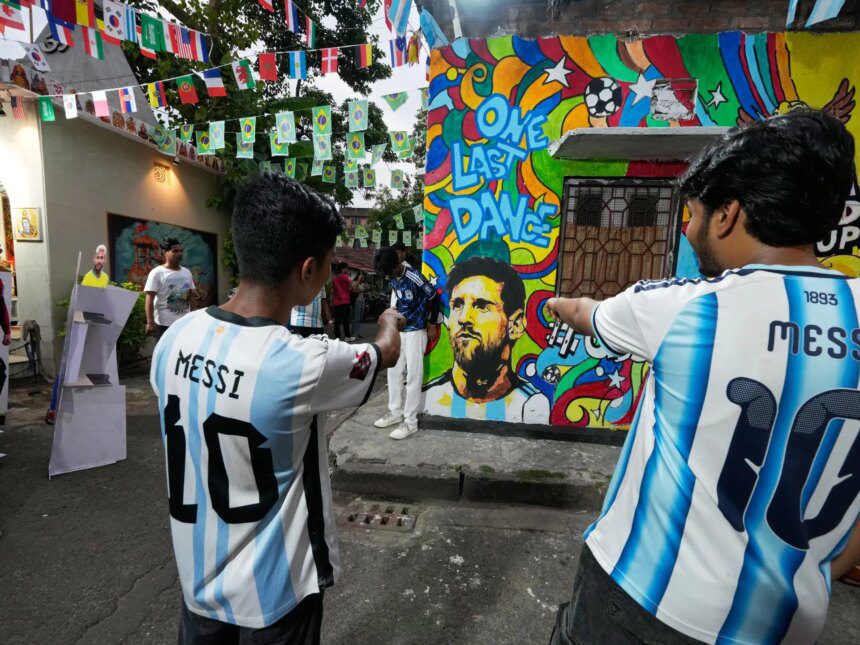
The connection between Kolkata fans and Argentine football is deeply rooted and has historical significance. Veteran journalist Indrajit Hazra describes how the first exposure to the World Cup in 1986 shifted the focus from Brazilian stars like Pelé to Argentine legends like Diego Maradona. “Maradona changed all that with his remarkable feats in 1986,” he noted, highlighting the cultural revolution in football fandom that occurred in Kolkata during that time.
Even today, Argentine players, particularly Lionel Messi, enjoy a status akin to idols. Messi’s visit last December exemplified this, as fans exhibited extreme emotional investment in their football heroes. The chaotic scenes that unfolded when Messi left early were reflective of the deep communal identity associated with football in Kolkata.
The Role of Supporters in Shaping Football Culture
Debanjan Banerjee sees himself as more than a mere supporter; he’s a keen observer of football fandom’s tribal nature. This tribalism can manifest in intense loyalty and rivalry, marking the dynamic culture of Kolkata football. In this environment, the political or social status of individuals can dissolve into the collective experience of being a fan, breaking down traditional barriers.
As Banerjee noted, “When you have larger-than-life idols, you cannot draw boundaries.” This encapsulates the way football transcends individual identities, creating a shared experience that extends beyond the pitch and into everyday life for many Kolkata residents.
What This Means
The fervor surrounding Kolkata’s football culture highlights the sport’s role as a cultural touchstone in Indian society. While other regions boast dedicated fan bases, Kolkata’s deep-rooted rivalries and connections to international football legends underscore a unique element of civic identity. Understanding this cultural framework can shed light on the local and national narratives that influence Indian football’s growth and its position in global discussions.
Frequently Asked Questions
What are the key clubs involved in Kolkata’s football rivalry?
The primary clubs are Mohun Bagan and East Bengal, whose matches generate significant interest and large crowds.
How has Argentine football influenced Kolkata fans?
Since Argentina’s success in the 1986 World Cup, particularly through Diego Maradona, many Kolkata fans shifted their loyalties, developing a strong emotional connection to Argentine football.
Why is football in Kolkata viewed differently than in other parts of India?
Kolkata’s football has a historical depth and a concentrated fan culture that fosters a unique intellectual engagement with the sport, unlike other regions in India where football may hold less significance relative to other sports.
How do local fans react to international football stars?
Local fans display an intense emotional investment in international stars, exemplified by the chaotic scenes that surrounded Messi’s visit, indicating a strong communal identity linked to football.