
Demand for Accountability in Ethanol Policy
Recently, there has been a growing call for Prime Minister Narendra Modi to take responsibility for the disarray surrounding ethanol policies in India, a sentiment expressed prominently by political commentator Sudhir Chaudhary. This call to action points towards deeper issues within the government’s management of alternative fuels and agricultural subsidies.
Context: The Ethanol Controversy
The Indian government has been promoting ethanol as a sustainable alternative to traditional fossil fuels, driven by a dual objective: reducing environmental pollution and bolstering rural income through sugarcane cultivation. However, the implementation of ethanol policies has faced significant challenges. Reports indicate that the production and distribution systems are ill-equipped, leading to inconsistencies in availability and pricing.
Critics argue that while the push for ethanol has potential benefits, it has been marred by inefficiency and mismanagement. Calls for accountability, particularly directed at Prime Minister Modi, suggest that there is public frustration with the lack of coherent policy execution. Modi’s government has been known for its ambitious agenda, but the challenges surrounding ethanol present a critical moment that could affect its credibility.
Sudhir Chaudhary’s Remarks
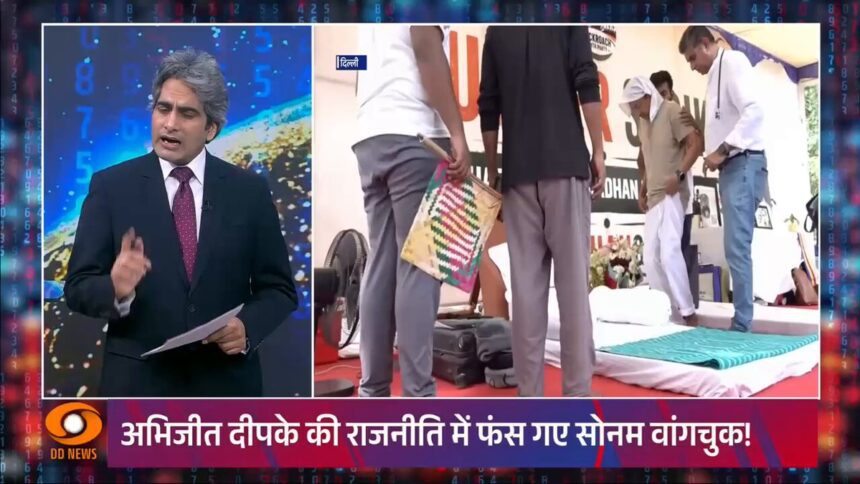
In a recent tweet, Sudhir Chaudhary remarked on the urgency of the issue by suggesting that instead of the usual stakeholders, Abhijit Dipke, a known activist, should undertake a hunger strike. This implies a societal demand for greater action from government officials related to ethanol policy. Chaudhary’s commentary reflects a broader sentiment among the public, who are seeking accountability at the highest levels of government.
The call for Modi to involve himself more directly in the ethanol policy debate not only highlights public grievances but also opens up a conversation about leadership in emergencies. Stakeholders are asking whether the Prime Minister will engage with agricultural issues that touch the lives of millions of farmers and consumers.
Political Implications of Ethanol Management
The ongoing ethanol policy discussions underscore broader agricultural and economic concerns in Indian politics. As the country seeks to transition towards a more sustainable energy model, the effectiveness of governmental policies is under examination. The public’s demand for Modi to take charge reflects dissatisfaction with perceived inaction and inefficiency.
How the government responds to these challenges could become a key factor in the lead-up to future elections. The stakes are high, as the government’s credibility hinges not only on economic growth but also on its ability to address pressing environmental issues effectively. If the government can turn around the ethanol situation, it may bolster its image as a forward-thinking administration committed to rural development and environmental sustainability.
Why This Matters
The ethanol policy debate is significant for Indian politics as it intersects with multiple critical issues including economic growth, rural development, and environmental sustainability. Modi’s leadership on this issue may define how the public perceives his government in relation to farmers and the agrarian economy. Furthermore, it sheds light on the effectiveness of governmental policy-making and execution in a rapidly changing global context. The political landscape is becoming increasingly competitive, and how well the current administration navigates these challenges could influence electoral outcomes and public trust.
Frequently Asked Questions
What are the main issues surrounding India’s ethanol policy?
The main issues include ineffective management, inconsistent supply chains, pricing problems, and a general lack of coherent execution of the government’s ethanol initiatives.
Why are public figures like Sudhir Chaudhary vocal about ethanol policy?
Public figures highlight issues like ethanol policy to raise awareness, promote accountability, and provoke necessary government action on pressing agricultural and environmental matters.
How does ethanol policy impact farmers in India?
Ethanol policies directly impact farmers as they rely on sugarcane cultivation for income. Ineffective policies may hurt their livelihoods by affecting pricing and market access.
What is Narendra Modi’s government doing to address these concerns?
While the government has shown a commitment to promoting ethanol, critics argue that it needs to implement more effective management strategies and engage directly with stakeholders to mitigate the ongoing issues.