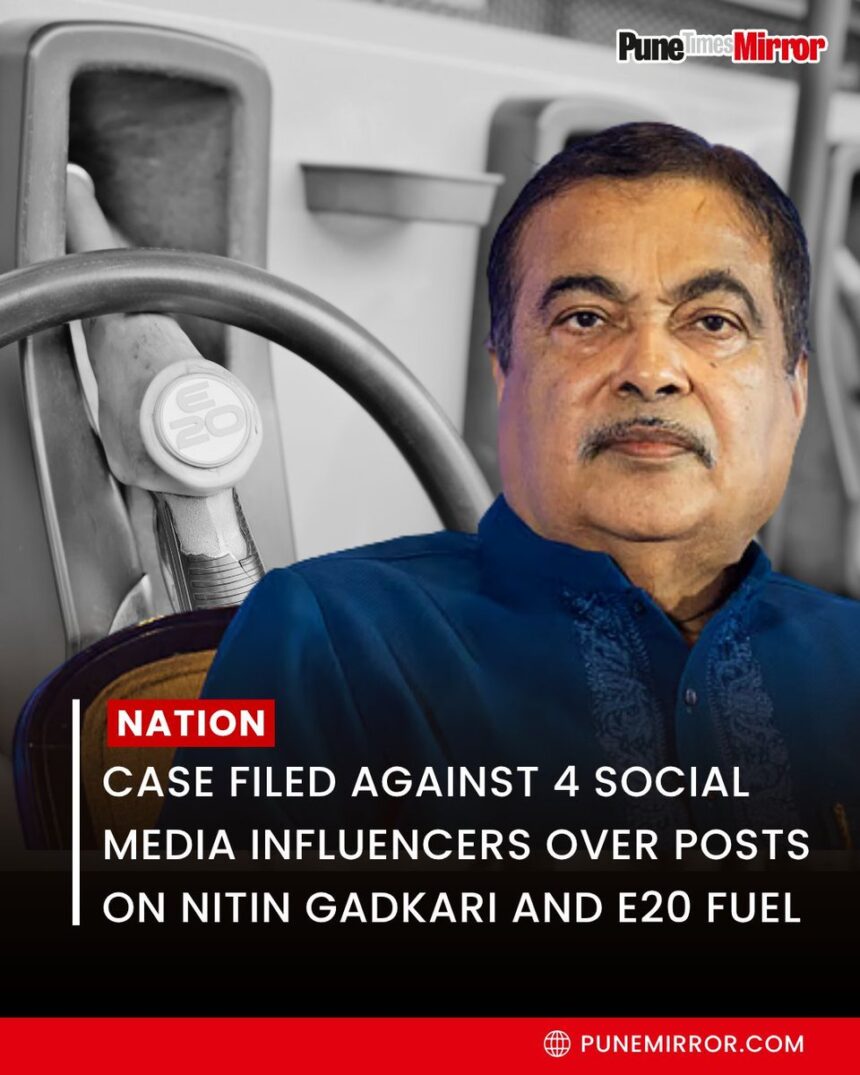

A recent case against four social media influencers has sparked significant discussion regarding freedom of expression and information dissemination in India. The influencers—Manish Kashyap, Desi Boyser, Harshit Rathi, and Anklesh Invatee—are accused of spreading misleading information about Union Minister Nitin Gadkari and ethanol-blended (E20) petrol, leading to a complaint filed by a BJP official.
Background of the Case
The case emerged from allegations that the aforementioned influencers shared misleading content related to Minister Nitin Gadkari, specifically regarding the promotion of E20 petrol, a blend of 20% ethanol in traditional petrol. This blend is part of India’s efforts to shift towards sustainable fuel alternatives, aligning with global environmental goals. The complaint was initiated by Shishir Arun Tripathi, the head of the Nagpur BJP Social Media Cell, suggesting that the influencers’ posts could mislead the public about the government’s initiatives in this area.
The Political Climate
This incident occurs within a broader context of heightened scrutiny of social media in India. The current Indian government has frequently expressed concerns regarding false information circulating on social media platforms. In recent years, there have been numerous examples of law enforcement officials and political parties taking legal action against social media users for content deemed damaging to political figures or institutions. These actions signal a tightening grip on public discourse in the digital realm, raising questions about the balance between national security and freedom of expression.
Reactions from the Public and Experts
The case has garnered mixed reactions from the public and political analysts. While some argue that false information spreads rapidly, potentially leading to public unrest, others view the actions against these influencers as an attempt to stifle dissent and free speech. Critics of the government argue that such measures serve more to protect political interests than the integrity of public information. Social media analysts have highlighted the challenges faced by users in navigating the boundaries of acceptable speech versus punitive legal repercussions.
Why This Matters
The significance of this case extends beyond the immediate implications for the influencers involved. It reflects a growing trend in India where digital expression is increasingly monitored and regulated. Authorities often juxtapose claims of misinformation with the need to maintain public order. For Indian citizens, this case is emblematic of the larger struggle over rights to free speech and the complex interplay between media, politics, and governance in a democracy. The decisions made in this case could set precedents for how similar cases are handled in the future, affecting ordinary citizens’ ability to voice opinions and engage in political discourse.
Frequently Asked Questions
What were the influencers accused of?
They were accused of spreading misleading information regarding Minister Nitin Gadkari and the use of ethanol-blended petrol (E20). The complaint was lodged by a member of the BJP’s social media team.
Who filed the complaint against the influencers?
The complaint was filed by Shishir Arun Tripathi, who is the head of the Nagpur BJP Social Media Cell.
What are the potential consequences for the influencers?
If found guilty, the influencers could face legal repercussions which may include fines or imprisonment, depending on the severity of the case and the applicable laws regarding misinformation in India.
Why is this case important for Indian citizens?
This case highlights critical issues regarding freedom of speech, the regulation of digital media, and the relationship between the government and social media. It raises questions about the rights of citizens to freely express their opinions without fear of retribution.