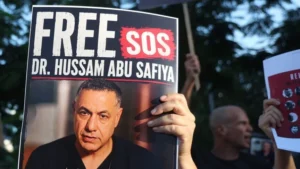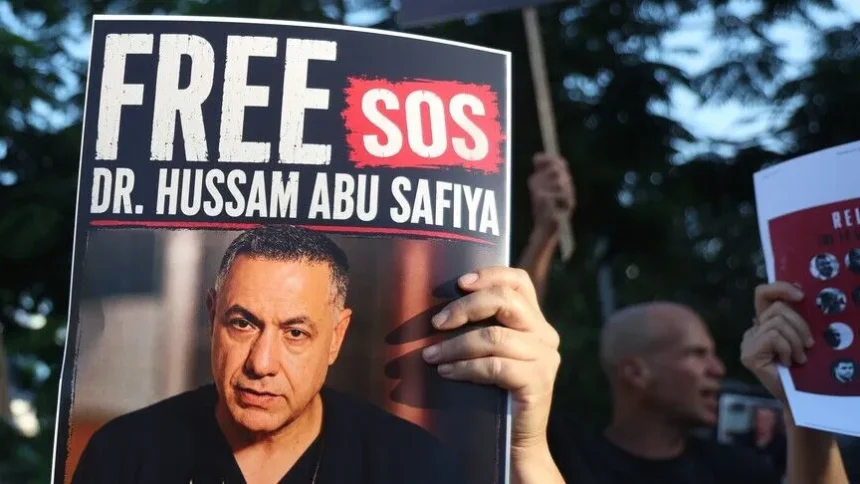

Palestine calls for an urgent international response to secure the release of Dr. Hussam Abu Safiya, the director of Kamal Adwan Hospital in northern Gaza. Detained by Israeli forces since December 27, 2024, his health has severely deteriorated in custody, highlighting ongoing concerns about the treatment of Palestinian healthcare workers and the broader human rights situation in the region.
Dr. Hussam Abu Safiya’s Deteriorating Condition
Dr. Hussam Abu Safiya has been in Israeli custody without charge since December 27, 2024. Reports indicate that he has faced severe mistreatment, including torture, solitary confinement, and a lack of adequate medical care. The permanent observer to the UN in Geneva, Ambassador Ibrahim Khraishi, has underscored that these conditions have led to a significant decline in Abu Safiya’s health, placing his life at imminent risk. His condition, particularly noted during a court appearance via video link on June 10, raised alarms as he appeared visibly emaciated.
International Appeals and Legal Obligations
Ambassador Khraishi has made an urgent appeal not only to the United Nations but also to various international humanitarian organizations to focus on Abu Safiya’s release. Khraishi pointed out that the case reflects a troubling pattern of attacks against Palestinian medical personnel, an issue exacerbated by Israel’s status as the occupying power under international humanitarian law. The UN has documented instances of human rights violations in this context, and international bodies are being urged to intervene in safeguarding the rights of detained healthcare workers.
The Broader Humanitarian Context
The situation regarding Dr. Abu Safiya is not an isolated case but part of a much larger crisis affecting thousands of Palestinians. Current estimates indicate that Israel holds approximately 9,500 Palestinian detainees, which includes vulnerable groups such as children and women. Many of these detainees reportedly suffer from similar experiences of torture and medical neglect. The backdrop to these detentions is the ongoing conflict in Gaza, intensified on October 8, 2023, which has reportedly resulted in over 73,000 Palestinian deaths and significant damage to the region’s infrastructure. The fragility of the healthcare system is particularly pronounced, as the attacks have decimated medical facilities and hindered access to care for those in need.
Why It Matters
The developments surrounding Dr. Abu Safiya’s continued detention point to a significant humanitarian crisis with broad implications for international law and human rights. For organizations monitoring the situation, it raises critical questions about the protection of healthcare workers under conflict situations. The global community’s response, or lack thereof, will set precedents for international humanitarian norms and could influence future diplomatic relations. For those deliberating on the role of technology in monitoring such situations, implications for data collection, reporting, and accountability are pertinent in ensuring that violations are documented and addressed.
Frequently Asked Questions
What are the current health conditions of Dr. Hussam Abu Safiya?
Dr. Hussam Abu Safiya has shown signs of severe health deterioration, including visible emaciation, and is at imminent risk due to his current treatment while in custody.
What legal actions have been taken regarding Abu Safiya’s detention?
International appeals have been made by Palestinian representatives to the UN and humanitarian organizations for the immediate release of Dr. Abu Safiya, as he has been held without charge.
How many Palestinians are currently detained by Israel?
As of the latest reports, Israel holds around 9,500 Palestinian detainees, which includes significant numbers of children, women, and those placed under administrative detention.
What impact has the conflict had on Gaza’s healthcare infrastructure?
The ongoing conflict has severely affected Gaza’s healthcare infrastructure, with estimates suggesting that about 91% has been damaged or destroyed, complicating access to medical care for the local population.