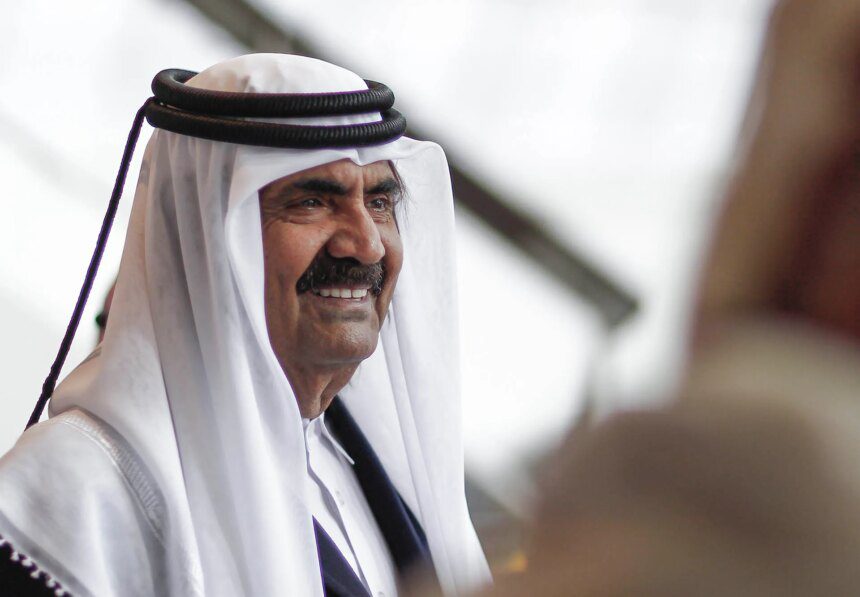

The passing of Sheikh Hamad bin Khalifa Al Thani, the father emir of Qatar, marks the end of an era for the Gulf nation. He was instrumental in transforming Qatar into a global player during his nearly two-decade reign, known for significant economic and cultural advancements. His death at 74 has elicited mourning from officials and citizens, illuminating the profound impact he had on the region.
Legacy of Leadership
Sheikh Hamad ruled Qatar from 1995 until 2013, during which time he was pivotal in reshaping the country’s economic landscape. His tenure witnessed the rise of Qatar as the world’s largest exporter of liquefied natural gas (LNG), thanks to his strategic investments in energy infrastructure and international partnerships. The emir’s focus on diversifying the economy paved the way for advancements in various sectors, including education, health, and tourism, thereby elevating Qatar’s status on the global stage.
In addition to economic reforms, Sheikh Hamad championed cultural development within the nation. He played a significant role in fostering educational reforms, establishing institutions like Education City, which consolidates various international universities. This has not only enriched the community culturally but has also attracted a diverse expatriate population, including many from India.
A Transition in Power
In a unique move for a Gulf monarchy, Sheikh Hamad abdicated power in 2013, transferring authority to his son, Sheikh Tamim bin Hamad Al Thani. This transition was characterized as a significant moment in Middle Eastern politics, showcasing a shift towards a more modern governance model. Sheikh Tamim, who was just 33 at the time, has since continued his father’s vision of rapid development and international cooperation, maintaining Qatar’s growing influence in global affairs.
Sheikh Hamad’s decision to step down was also a reflection of his confidence in the younger generation, indicating a gradual evolution in leadership dynamics across the Gulf Cooperation Council (GCC) countries, where long reigns have traditionally been the norm.
India-Qatar Relations
As Qatar mourns the loss of a transformative leader, the implications are felt internationally, especially in India. The relationship between India and Qatar has deepened in recent years, grounded in robust trade ties, energy cooperation, and a significant Indian expatriate community. Indians constitute the largest segment of the foreign workforce in Qatar, and Sheikh Hamad’s era was marked by enhanced diplomatic engagements that benefitted this demographic.
The continuation of Qatar’s economic and cultural projects under Sheikh Tamim’s leadership bodes well for Indian nationals engaged in various sectors, from construction to IT. As Qatar seeks to maintain its status as a global energy hub, Indian companies could see opportunities for greater collaboration in infrastructure and technology sectors, aligning with India’s own strategic interests in the Gulf region.
What This Means
The death of Sheikh Hamad bin Khalifa Al Thani is significant for India due to the established strategic and economic partnerships with Qatar. The country has become crucial not only as an energy supplier but also as a destination for Indian expatriates seeking employment and better living standards. The transitional leadership might carry forward the existing policies that favor bilateral relations, thus providing opportunities for Indian businesses and workers alike.
Moreover, this change in leadership in the Gulf could affect broader regional dynamics, potentially influencing trade routes and economic stability in the area, which is of paramount interest to Indian policymakers and businesses involved in international trade.
Frequently Asked Questions
What is Sheikh Hamad bin Khalifa Al Thani known for?
He is best known for transforming Qatar’s economy into a leading global power through lucrative investments in energy, education, and international partnerships during his reign from 1995 to 2013.
How did Sheikh Hamad’s abdication affect Qatar?
His abdication marked a rare transition of power in the Gulf, signaling a potential modernization in governance, and set the stage for his son, Sheikh Tamim, to continue developing the nation.
What are the implications for Indian workers in Qatar after his death?
The implications are largely dependent on the continuity of existing policies; however, Sheikh Hamad’s legacy of promoting Indian expatriate labor is likely to persist under Sheikh Tamim’s administration.
How is Qatar’s relationship with India likely to evolve?
Given the solid bilateral relationships in terms of trade and the significant Indian workforce, Qatar is expected to maintain and possibly enhance ties with India, fostering opportunities for business and collaboration.