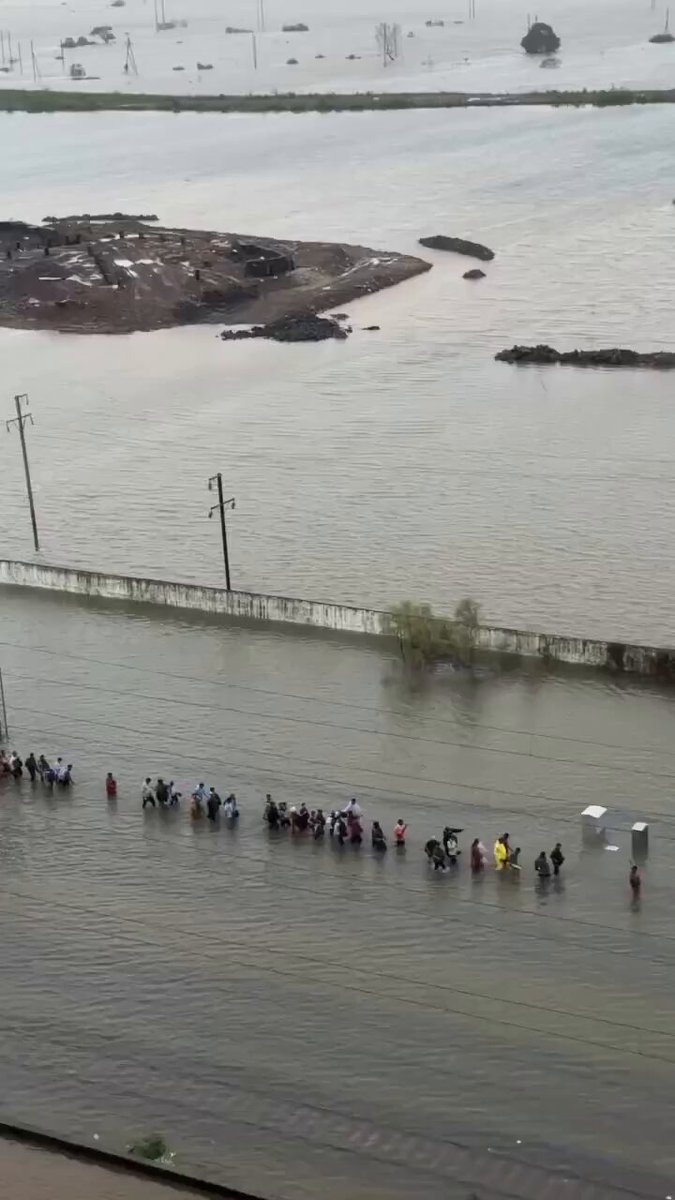

The situation in Vasai–Virar has become dire as thousands of residents are forced to navigate through four feet of floodwaters to reach their homes. With no electricity, no mobile network, and transport brought to a standstill, the ongoing crisis highlights the struggles faced by millions in one of India’s largest urban regions.
Current State of Affairs
For the last four days, locals have been grappling with extensive flooding that has submerged their homes and livelihoods. Reports indicate that floodwaters have reached heights of up to four feet, leaving many residents stranded. The absence of electricity has further compounded issues, resulting in complete darkness and loss of communication capabilities. With transport heavily disrupted, many families are unable to leave their homes, raising urgent concerns about their safety and access to essential services.
The Wider Impact on Mumbai and Surrounding Areas
Vasai–Virar, located just an hour or two from Mumbai, is emblematic of the larger challenges faced by densely populated urban regions in India during the monsoon season. Flooding in these areas often leads to significant infrastructure damage and economic loss. The current situation is not just a local crisis; it has consequences for the entire region and nearby Mumbai, which faces its own annual challenges related to heavy rains and flooding.
Government Response and Public Sentiment
In the face of this crisis, public frustration is mounting over what many perceive as a lack of adequate government response. Reports suggest that officials are hesitant to speak candidly about the disaster due to fears it may “defame” Maharashtra, a sentiment echoed by some residents concerned about how the situation is portrayed. This tension highlights a broader issue in Indian politics, where leaders may prioritize public image over addressing pressing humanitarian needs. The need for effective disaster management and transparent communication has never been more evident.
Why This Matters
The flooding in Vasai–Virar and the subsequent government response (or lack thereof) is significant for several reasons. First, it underscores the vulnerability of urban regions to climate change and extreme weather events, issues that are becoming increasingly important in political discourse. Second, the situation raises questions about governance and accountability in disaster management, an area where Indian authorities have often faced criticism. Third, the reaction from citizens reflects a growing demand for transparency and responsiveness from those in power. As the nation prepares for elections, such crises could influence public sentiment and voter behavior.
Frequently Asked Questions
What caused the flooding in Vasai–Virar?
The flooding is attributed to heavy rainfall during the monsoon season, which led to excessive water accumulation in the area. Poor drainage infrastructure in urban regions has exacerbated the situation.
How are residents coping without electricity?
Residents are finding it difficult to cope with the lack of electricity, leading to challenges in accessing food, medical services, and water supply. Many have resorted to using candles and portable chargers where possible.
What is the government’s response to the crisis?
While some local authorities have begun to assess the situation, many residents feel that the response has been inadequate and slow, leading to frustration among the affected population.
What are the long-term implications of this flooding?
The long-term implications could include increased infrastructure investment for better flood management, heightened awareness of climate change effects, and potential shifts in political power if the current government is seen as failing to protect its citizens.