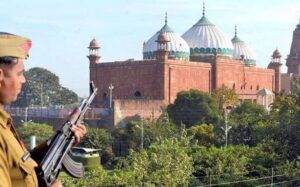

In a significant escalation of tensions surrounding religious sites in India, the authorities have ordered the Ganj Shahida Masjid to vacate its land by June 20, 2026. This legal notice comes as part of an expansion plan for the Cantt Railway Station, raising fears over the fate of the mosque and spotlighting broader issues of discrimination and marginalization faced by Indian Muslims under the current political climate.
The Issuance of the Legal Notice
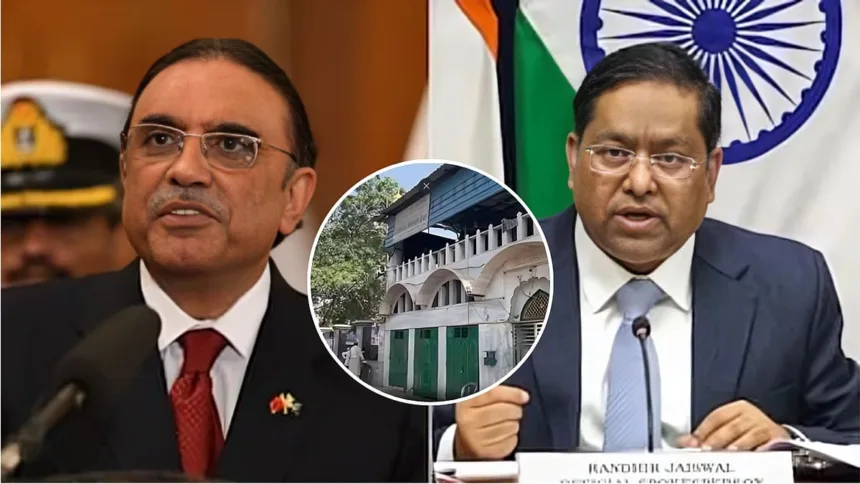
Railway authorities confirmed that a notice was prominently displayed on the mosque’s wall, calling for its evacuation to facilitate the station’s expansion. The notice explicitly states that failure to comply will result in a forceful demolition of the mosque. Superintendent Arpit Gupta defended this action, claiming it is necessary to remove encroachments for ongoing construction work surrounding the station. Such actions have become increasingly common in India, raising eyebrows about their implications for minority religious sites.
The Response from the Mosque Committee
The Intezamia Masjid Committee (IMC), responsible for overseeing the Ganj Shahida Masjid, is preparing to challenge the legal notice in the Supreme Court. Joint Secretary SM Yasin emphasized the mosque’s historical importance, asserting that it was built in 1034 to commemorate those who perished in India’s freedom struggle, well before the railway’s establishment in 1887. Yasin expressed skepticism about the legality of the eviction, noting that the land in question was specified in historical settlement maps, reaffirming its status as a recognized site long before the railway expansion project. He also mentioned that the District Magistrate had assured them that no demolition would occur forcibly, indicating a potential pathway for resolving the conflict amicably.
Historical Context and Current Concerns
The Ganj Shahida Masjid is not just a place of worship but a historical landmark that stands as a testament to the struggles faced by those who fought for India’s independence. The mosque committee argues that the ongoing legal issues stem from a lawsuit unrelated to the mosque itself, which only further complicates the narratives surrounding land ownership and usage in India. The significance of the mosque is not merely religious; it also embodies an ethnic and national history that is at risk of being overlooked in the face of development projects. This incident exemplifies a broader trend of social exclusion and marginalization faced by the Muslim community in India, reflecting a growing concern among advocates for religious freedom and minority rights.
Why It Matters
The Ganj Shahida Masjid incident highlights the intersection of religion, history, and politics in India, particularly under the Sangh Parivar and Bharatiya Janata Party (BJP) governments. The pressures exerted on minority religious institutions may serve to marginalize Muslims further, raising questions about the future landscape of religious tolerance in the country. Such actions not only affect the immediate community but also hold implications for social cohesion in a diverse society. As the AI and global tech industries increasingly engage in social justice and equity issues, understanding these dynamics is critical for informed development and corporate responsibility in the region.
Frequently Asked Questions
What is the current status of the Ganj Shahida Masjid?
The mosque has received a legal notice to vacate its land by June 20, 2026, as part of a railway station expansion plan. The mosque committee is planning to challenge this notice in the Supreme Court.
What is the historical significance of the Ganj Shahida Masjid?
The mosque was constructed in 1034 to honor those lost during the freedom struggle of India. It holds cultural and historical importance, predating the establishment of the railway in the area.
What actions are being taken by the mosque authorities in response to the legal notice?
The Intezamia Masjid Committee is preparing to legally contest the removal order and has met with the District Magistrate, who has indicated that no demolition will occur forcibly.
How does this situation reflect broader issues affecting Indian Muslims?
This incident illustrates ongoing concerns about discrimination, social exclusion, and the marginalization of Muslim communities in India, particularly under the current political climate surrounding development and land rights.