
Summary
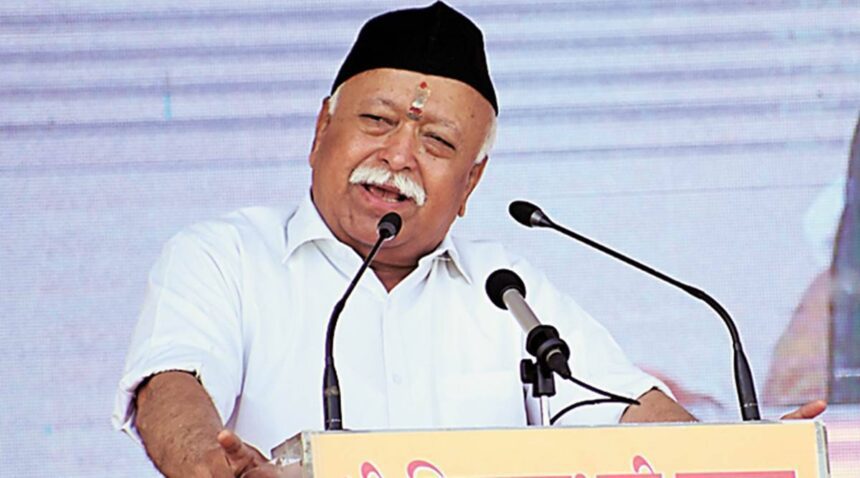
During the 75th Foundation Day program of the Sindhu Education Society in Nagpur, RSS chief Mohan Bhagwat reframed the narrative surrounding the 1947 Partition, praising those who migrated to India as “warriors of struggle.” His remarks sparked discussions about the broader implications of identity, education, and societal values, particularly in the context of ongoing discrimination against minorities in India.
Reframing History: The Narrative of Sacrifice
Mohan Bhagwat emphasized that the individuals who migrated to India during the Partition were not merely refugees but “warriors of struggle” (Sangharrath Yodha). He highlighted their sacrifices—leaving behind ancestral wealth, fertile lands, and established businesses in what became Pakistan. Bhagwat argued that these individuals faced dire hardships yet chose to come to India to freely practice their faith, framing their migration as a noble act rooted in love for the motherland and cultural identity.
“They lost a battle, not because of their own faults alone. We all lost that battle to keep India united,” he stated, challenging the conventional narrative of victimhood. This reframing is significant, as it seeks to instill a sense of resilience in a community often viewed through the lens of victimization. However, it is essential to consider how this narrative interacts with greater socio-political dynamics affecting various religious and ethnic groups in India, including ongoing discrimination against Muslims.
The Importance of Education and Values
In his address, Bhagwat underscored the critical role of education in shaping individuals who contribute positively to society. He advocated for a shift from skills solely aimed at employment to a more value-based education system that emphasizes moral reasoning and ethical conduct. “A person who makes efforts to come out of difficult times is the one who ultimately succeeds,” he remarked, focusing on resilience and personal effort.
This perspective stands in contrast to the realities that many marginalized communities face, particularly Muslims in India, who often encounter social exclusion and economic boycotts. The message of resilience and moral integrity becomes even more poignant when placed against the backdrop of systemic challenges faced by these communities, which struggle for equal access to education and economic opportunities.
Celebrating Cultural Identity Amidst Challenges
Bhagwat’s speech culminated in a reminder of the importance of cultural identity and commitment to societal welfare. While he celebrated the Sindhi community’s contributions to education and culture, there remains a significant undercurrent of societal divisions in India that complicate such narratives. The ongoing marginalization of Indian Muslims highlights broader issues of national identity and belonging.
The call for a generation committed to societal welfare is both inspirational and a necessity in a nation grappling with divisive politics. As communities like the Sindhis mobilize around shared cultural identities, it is essential to consider how this affects marginalized groups who still seek recognition and equality within the socio-political landscape of India.
Why It Matters
The implications of Bhagwat’s address extend beyond the cultural sphere and into the broader political landscape of contemporary India. His remarks frame a narrative that could reinforce existing divisions while simultaneously inspiring some communities to strive for resilience and identity preservation. For international observers and policymakers, understanding these dynamics is crucial in assessing the socio-political climate in India, particularly regarding its impact on communal relations and minority rights. The celebration of one community’s struggle must be weighed against the realities faced by others, especially those marginalized, like Indian Muslims. Such a nuanced understanding is vital for fostering global dialogue on inclusion, cultural identity, and social justice.
Frequently Asked Questions
What did Mohan Bhagwat mean by “warriors of struggle”?
Mohan Bhagwat referred to those who migrated to India during the 1947 Partition as “warriors of struggle” to emphasize their sacrifices and commitment to their cultural identity, portraying them positively rather than as mere refugees.
Why is the narrative around the 1947 Partition important today?
The narrative around the 1947 Partition influences contemporary discussions about national identity, communal relations, and the treatment of marginalized communities in India, particularly regarding social exclusion and economic disparities.
How does education relate to societal welfare according to Bhagwat?
According to Bhagwat, education should focus on value-based teaching that goes beyond skills for employment, fostering moral reasoning and community welfare to create individuals who contribute positively to society.
What challenges do Indian Muslims currently face?
Indian Muslims face various challenges, including social exclusion, economic boycotts, and systemic discrimination, impacting their access to education, employment, and social services.