
Summary
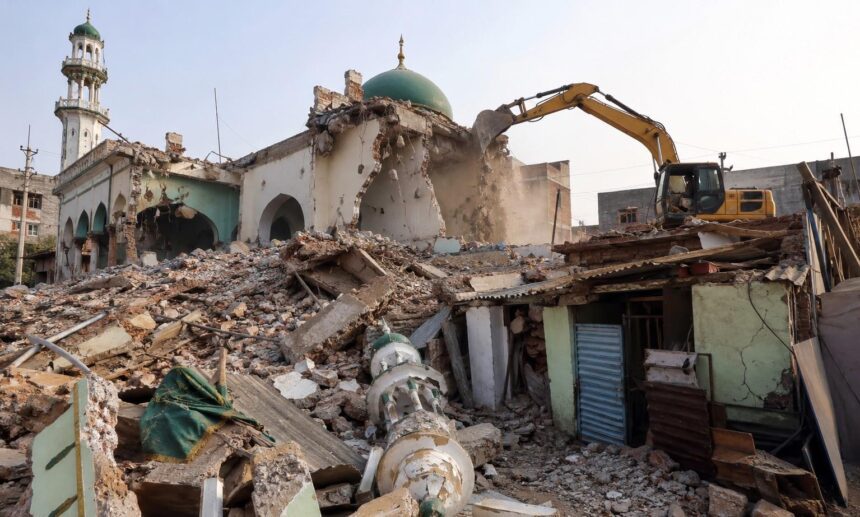
The demolition of structures belonging to the Muslim community in BJP-ruled Gujarat has escalated, raising serious concerns about the adherence to legal protections against unwarranted demolitions. Recent actions have targeted mosques, shrines, shops, and homes, allegedly ignoring judicial oversight and due process.
Demolition of Religious Sites
In Kutch district, Gujarat, several significant religious structures, including the Juna Kandla Mosque, have been demolished without prior notifications. The Juna Kandla Mosque, which has been registered with the Gujarat State Waqf Board since 1965, was destroyed in a night operation, preventing mosque management members from intervening. Mohammad Samar, the president of the mosque committee, expressed frustration over the lack of communication from local authorities regarding these demolitions.
Required prior notices, as mandated by the Supreme Court, were reportedly ignored. Community leaders allege that this ongoing demolition spree has targeted approximately 30 structures, including multiple religious sites, with a disproportionate effect on the Muslim population.
Community Response and Legal Challenges
A delegation from the Jamiat Ulama-i-Hind (JUH) assessed the situation and met with community leaders and residents affected by the demolitions. Their findings indicate that 11 religious sites and numerous commercial establishments belonging to Muslims were dismantled. Abdul Hasan from JUH reported a lack of clear justification from district administration about these actions, particularly the claim that certain buildings were inappropriately located near the India-Pakistan border, despite many being situated far from it.
The JUH’s delegation also highlighted that 25 Muslim youths protesting against the demolitions were arrested in Nana Varnora village. The civil disobedience among the local population has escalated in response to perceived systemic injustice, exemplifying a growing rift between community sentiments and government actions.
Government Justifications and Community Costs
The Gujarat government, led by Chief Minister Bhupendra Patel, maintains that the demolition drive is part of a “Zero Tolerance” policy against illegal encroachments. Local activists argue that this rationale is a guise for targeted actions against Muslim community members. Reportedly, nine houses and 21 shops belonging to Muslims in Nana Varnora have been demolished earlier with no notice, adding to a pattern of targeted actions under the pretense of urban development and encroachment removal.
Civil rights organizations, including the All-Kutch Muslim Samaj, are calling for an impartial inquiry into these actions, demanding compensation for the affected families and accountability for local officials responsible for the apparent violations of legal processes. The community’s anger is compounded by a sense of systemic discrimination, raising questions about the treatment of minorities in state policy.
Why It Matters
The demolition of Muslim-owned properties in Gujarat illuminates broader concerns regarding human rights and legal protections for minority communities in India. Such actions highlight the tension between government policies labeled as public order maintenance and the significant social and economic ramifications for marginalized groups. The international community has a vested interest in understanding these dynamics as they relate to global human rights standards and the preservation of religious freedom. Furthermore, these events raise questions regarding the implications for social cohesion in a diverse society.
Frequently Asked Questions
What has been demolished in Gujarat’s Kutch district recently?
Recent demolitions include mosques, mazars, commercial establishments, and residential houses primarily owned by the Muslim community, with reports indicating around 30 structures affected.
Why were the demolitions carried out without prior notice?
The local administration claims the actions are part of a “Zero Tolerance” policy against illegal encroachments. However, community leaders argue that this is unjustified and lacks transparency.
What is the reaction from the local Muslim community?
The local Muslim community has expressed outrage, staging protests and calling for accountability while seeking legal remedies through organizations such as the Jamiat Ulama-i-Hind.
Are there any legal actions being pursued regarding these demolitions?
Yes, the Jamiat Ulama-i-Hind is consulting legal experts to explore possible legal remedies and has raised concerns about violations of due process to relevant authorities.