
Increasing Polarization: A Call for Violence
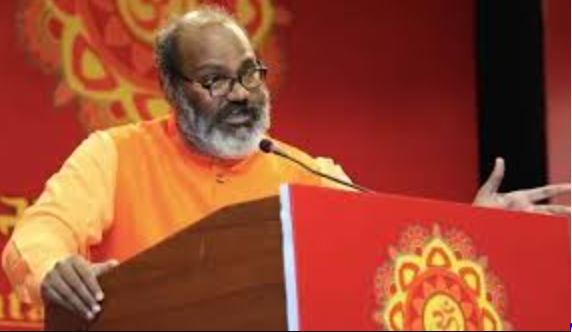
Recent comments made by controversial Hindutva priest Yati Narsinghanand Saraswati have intensified fears of communal violence in India. Narsinghanand publicly supported Anil Yadav’s inflammatory call for the “genocide” of Muslims in the country, using Israel’s military actions in Gaza to justify his stance. This incident raises serious questions about the current social climate under the ruling Bharatiya Janata Party (BJP) and its affiliates.
Contentious Remarks at a Public Gathering
The remarks were made during a Hindu panchayat at the Dasna Devi Temple in Ghaziabad, Uttar Pradesh. Narsinghanand was seen in videos exalted by Yadav’s speech, which encouraged violence against Muslims, eliciting outrage online and calls for legal action. “Israel is bombing Muslims in Gaza. That is why Israelis and Jews are peaceful and are travelling the world peacefully without being convicted,” he stated. This statement not only legitimizes hostility towards Muslims in India but also invokes international conflicts to stir up domestic hate.
Legitimizing Communal Violence
By standing in defense of Yadav, Narsinghanand has further fueled accusations of institutionalizing hate speech within Hindu nationalist circles. Many social media users condemned his remarks, with criticisms highlighting his role as a “blood-thirsty idiot” thriving on venomous rhetoric. The social and political implications of such statements reflect a growing trend of discrimination against Muslims in India, indicating that marginalized communities may face increased threats of violence and exclusion under the current socio-political paradigm.
Why It Matters
The unfolding situation is significant as it highlights the dangerous intersection of politics and religion in India. The BJP and its associated organizations like the Rashtriya Swayamsevak Sangh (RSS) have been accused of creating an environment that normalizes hate speech and violence against minority communities, particularly Muslims. This trend could result in heightened communal tensions, leading to social unrest and further marginalization of Muslim communities economically and socially. Understanding the dynamics of such rhetoric helps contextualize the rising risks faced by marginalized groups in other global scenarios where similar patterns emerge.
Frequently Asked Questions
What did Yati Narsinghanand say during the panchayat?
Narsinghanand supported Anil Yadav’s call for the “genocide” of Muslims in India during a Hindu panchayat, justifying his views by referencing the Israeli military actions in Gaza.
What was the public reaction to these remarks?
The comments sparked outrage online, with many condemning Narsinghanand for legitimizing violence against Muslims. Social media users labeled him as a “blood-thirsty idiot” for inciting communal hatred.
Has there been any official response to these comments?
As of now, no official comment or police action has been reported regarding Narsinghanand’s remarks.
Why is this incident significant for Muslim communities in India?
This incident underscores the growing acceptance of hate speech within Hindu nationalist rhetoric, which could lead to increased acts of discrimination and violence against Muslims, perpetuating their marginalization in society.