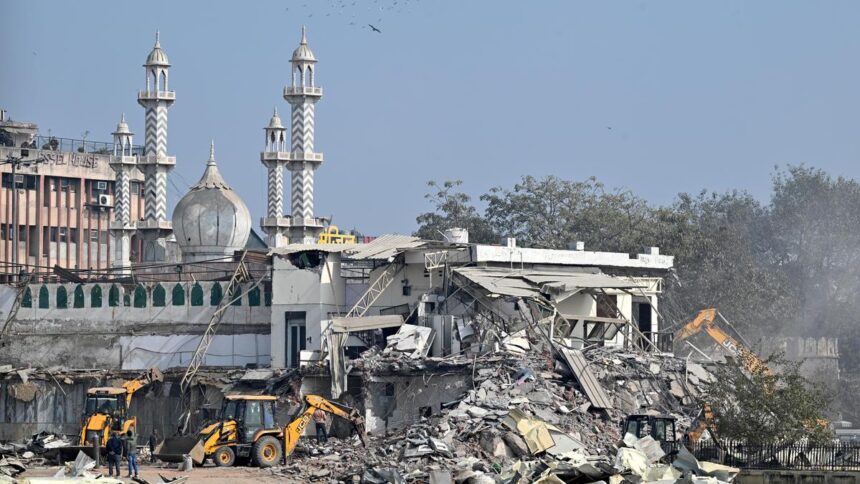

Recent demolition drives led by municipal authorities across several Indian states have sparked outrage among Muslim communities, highlighting ongoing discrimination and marginalization. Prominent Muslim organizations are uniting to challenge these actions, claiming they violate the principles of justice and the rule of law.
Ongoing Demolitions and Community Response
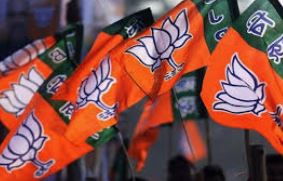
Across Rajasthan, Maharashtra, Uttarakhand, and Uttar Pradesh, a series of demolitions targeting mosques, madrasas, and other religious structures have drawn condemnation from various Muslim bodies. Leaders from organizations such as Jamiat Ulama-i-Hind have described the situation as an “undeclared emergency,” arguing that these actions contravene constitutional rights. Arshad Madani, the president of Jamiat Ulama-i-Hind, stated, “If governments begin dispensing justice through bulldozers instead of courts, what is the meaning of the rule of law and citizens’ rights?” This sentiment reflects deeper concerns about the governance approach under the ruling Bharatiya Janata Party (BJP) and its affiliates.
Legal Action and Advocacy Efforts
In response to the demolition drives, various organizations are mobilizing legal efforts to protect their rights. The Jamaat-e-Islami Hind has committed to providing legal aid to those impacted by the bulldozer actions. A spokesperson expressed their determination to support victims and advocate for their rights at all levels, emphasizing the need for accountability in governance. Similarly, the All India Muslim Personal Law Board is launching a nationwide movement aimed at addressing the marginalization of Muslims across communities, specifically in light of ongoing demolitions.
The Political Context of Marginalization
The current wave of demolitions is viewed by many as part of a broader socio-political agenda that has emerged since the BJP came to power in 2014. Zafarul Islam Khan, the former chairman of the Delhi Minorities Commission, articulated concerns regarding “bulldozer politics,” which he believes are tied to long-standing ideological objectives associated with the Rashtriya Swayamsevak Sangh (RSS). He pointed to historical parallels, noting that institutions being targeted today once played significant roles in the nation’s struggle for independence. This history brings into focus the motivations behind these demolition acts, which many perceive as fueled by prejudice rather than legitimate legal grounds.
Why It Matters
The implications of these demolitions resonate beyond just the affected communities; they raise urgent questions about the erosion of democratic norms and civil rights in India. By challenging the rule of law and potentially engaging in discriminatory practices, the government may be undermining its own claims to uphold justice and equality for all citizens. This environment fosters a climate of fear and unrest, with immediate impacts on community cohesion and long-term consequences for social stability. Observers must critically assess how such actions reflect broader trends in governance and societal attitudes toward minority groups.
Frequently Asked Questions
What are the key reasons behind the recent demolitions of mosques and madrasas in India?
The demolitions are often justified by authorities under claims of illegal construction, but many community leaders argue they are politically motivated actions that violate the rights of religious minorities.
How are Muslim organizations responding to these demolition drives?
Muslim organizations are uniting to seek legal relief and challenge the demolitions. They are mobilizing community members and launching movements to advocate for their rights and restore demolished structures.
What historical context is important to understand the current situation?
Many view the demolitions as part of a larger trend linked to political narratives since 2014, where minority communities have faced increased marginalization and discrimination fueled by governmental policies and actions.
What does the term “bulldozer politics” refer to in this context?
“Bulldozer politics” refers to the approach of using state machinery to demolish perceived illegal structures, often disproportionately targeting minorities, which raises questions about the legitimacy of such actions under the rule of law.