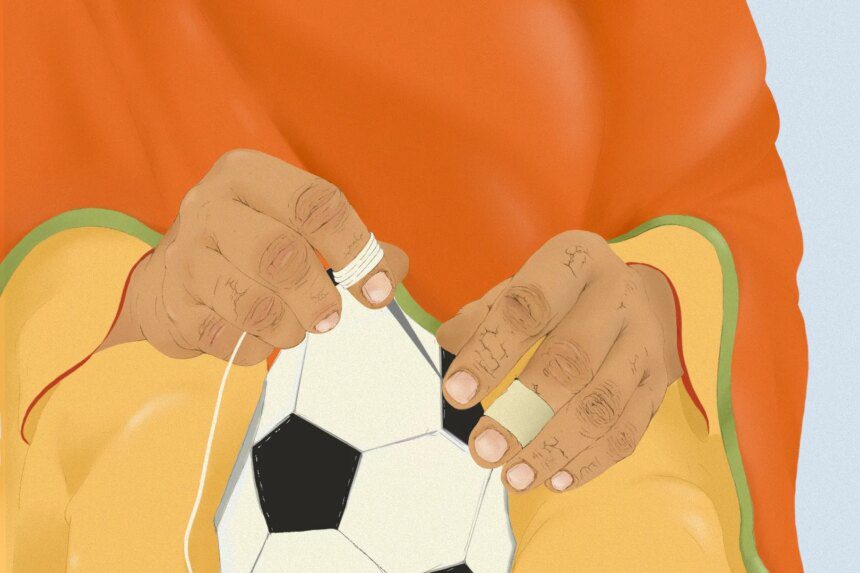

The football manufacturing industry in Sialkot, Pakistan, has made significant strides in eliminating child labour and improving working conditions, thanks in part to community involvement and regulatory frameworks. With over 1,400 registered stitching centres, many families have escaped poverty by participating in this industry, yet they still face social stigma. The story highlights both the challenges and achievements in the region’s journey toward better livelihoods.
The Journey from Child Labour to Empowerment
In the late 1990s, international outrage over child labour in Sialkot’s football factories prompted a significant overhaul of the industry. Following a shocking photograph of a young boy stitching a football for a global brand, various stakeholders, including FIFA and UNICEF, came together to address the issue. The Atlanta Agreement of 1997 committed to eliminating child labour, marking a turning point for the region.
Since then, organisations like the Independent Monitoring Association for Child Labour (IMAC) have worked closely with local communities for nearly three decades. They focus on registering stitching centres—facilities that guarantee compliance with child labour laws and provide better working conditions. IMAC’s chief executive, Nasir Dogar, notes a comprehensive approach was necessary: “We spent hours understanding what was driving them to engage young children in stitching footballs…” This collaborative effort has led to the registration of numerous centres, contributing to a dramatic increase in school enrolment among children.
Life Transformations through Football Stitching
For many families in Sialkot, the football manufacturing industry presents a lucrative opportunity. Workers like Ansar Majeed have seen their lives transformed through this avenue. Despite starting her stitching journey in difficult conditions—often by the light of an oil lantern—Ansar, with the help of her husband, built a stable life. They moved from a room adjoining a mosque to a three-room house, illustrating the potential for economic upliftment through skilled labor.
However, as families moved from mud houses vulnerable to floods to more stable homes, they also faced societal challenges. “These communities have had to face a lot of stigma,” says Dogar, reflecting on how people often hid their involvement in football stitching due to social judgment. Consequently, despite the economic benefits, many workers still grapple with societal perceptions that undermine their dignity and progress.
Community Rehabilitation and Schooling Initiatives
Sialkot’s journey toward community rehabilitation has been marked by significant strides in education. Local initiatives aimed at eliminating child labour have resulted in communities working together to build registered stitching centres. Villagers engaged in constructing facilities, and incentives were provided for educational attainment; a village that achieved full school enrollment would raise a white flag to commemorate the achievement. According to a UNICEF audit, between 96 and 97 percent of children in these villages are now attending school, a remarkable feat in promoting long-term sustainable development.
Despite these advancements, challenges remain. The need to provide consistent jobs and fair wages for adult workers is still crucial for maintaining the positive trajectory of these communities. Better working conditions for adult stitchers not only ensure a more robust economy but also reduce any temptation to revert to using child labour should financial pressures arise.
What This Means
The efforts in Sialkot present critical lessons for India, particularly as it grapples with similar issues of child labour and economic disparity in low-wage industries. With a rich tapestry of handicrafts and manufacturing, the Indian subcontinent could benefit from adopting policies that promote ethical labor practices while ensuring economic upliftment. The collaboration between stakeholders—government, NGOs, and communities—demonstrates that sustainable development is achievable through collective action and shared responsibility.
Frequently Asked Questions
What steps are being taken to eliminate child labour in football stitching?
Since the Atlanta Agreement in 1997, key stakeholders like FIFA, UNICEF, and local organisations have implemented monitoring systems to ensure child labour is removed from football manufacturing.
How has the community responded to initiatives against child labour?
The community has actively participated in building stitching centres, thereby contributing to local economic activities and educational improvements, as evidenced by high school enrollment rates.
What are the long-term benefits of these initiatives for families?
Families engaged in football stitching have seen improved living conditions and financial stability, especially when children are not required to work, enabling better educational opportunities.
How can India benefit from Sialkot’s experience?
India can learn from Sialkot’s community-driven approach to eliminating child labour, emphasizing ethical practices, local engagement, and the importance of education to improve socio-economic conditions.