
Summary
During a recent debate on the Ram Mandir donation controversy, Aaj Tak’s approach to audience participation raised concerns about bias and neutrality. Notably, participants identified as supporters or members of the ABVP were given platform prominence, subtly undermining the debate’s integrity.
Questionable Audience Participation
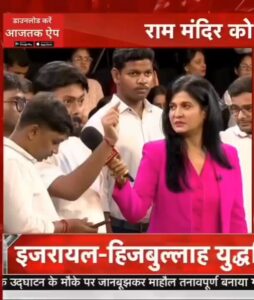
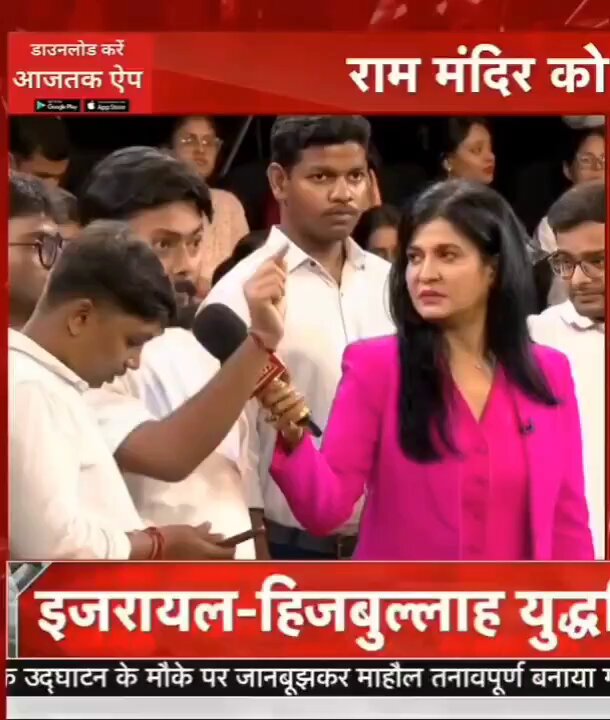
Aaj Tak’s decision to involve a “Gen Z” audience in debates has sparked controversy over how neutral this participation is. The selection of audience members appears to lean towards individuals with known affiliations to the BJP or its youth wing, the Akhil Bharatiya Vidyarthi Parishad (ABVP). For instance, Deepak Kashyap Mishra has been spotted frequently in these discussions, actively challenging opposition figures. His recurring presence raises questions about whether the debate truly represents diverse viewpoints.
Another audience member, Shreyansh, is explicitly linked to the ABVP. This trend indicates a pattern where individuals engaging with the anchors tend to echo pro-BJP sentiments rather than providing a balanced critique of all political parties.
Anchor Dynamics
The role of anchors in shaping political discourse cannot be underestimated. Anchors like Anjana Om Kashyap have been noted for their aggressive questioning tactics directed at opposition leaders while avoiding similar scrutiny of the ruling government. This creates an environment where the opposition feels cornered, unable to present its arguments on equal footing.
When the microphone is consistently directed towards known supporters of the ruling party, the effectiveness of a fair debate is significantly compromised. The anchors not only facilitate this imbalance but also model the expectations for the audience’s participation. This dynamic contributes to a combative atmosphere that favors one political narrative over another.
Topic Selection and Framing
Beyond the audience and anchors, the topics selected for discussion further illustrate a strategy that appears designed to defend and praise the BJP government. Controversial issues regarding the Ram Mandir donations have been positioned in a way that allows the ruling party to shift focus from potential misgivings and allegations.
This framing often enables the BJP to maintain a favorable image while attacking the credibility of the opposition. By controlling the narrative around such discussions, the channel can mitigate scrutiny directed at the ruling party, thereby enhancing voter perceptions favorably.
Why This Matters
The implications of this media bias extend deep into the political landscape of India. As the nation’s democratic fabric is tested, the role of media becomes increasingly critical. Aaj Tak’s perceived partisanship raises alarms about the quality and fairness of political discourse in India.
For young, impressionable voters, such biases in media framing may warp their understanding of political realities, potentially skewing election outcomes. When media platforms prioritize partisanship over factual representation, it challenges the foundational principles of democratic engagement and informed citizenship. Recognizing and addressing such biases is crucial for upholding the integrity of India’s democratic processes.
Frequently Asked Questions
What is the Ram Mandir donation controversy?
The Ram Mandir donation controversy revolves around funding for the construction of a temple in Ayodhya, where a mosque was demolished in 1992. Questions about the transparency and ethical considerations of the fundraising process have emerged.
Who are Deepak Kashyap Mishra and Shreyansh?
Deepak Kashyap Mishra is a young participant frequently seen questioning opposition leaders during debates, raising concerns about his neutrality. Shreyansh is associated with the ABVP, a student organization linked to the BJP, adding to questions about bias in audience participation.
How do anchors influence political debates?
Anchors play a vital role in shaping the narrative and tone of political debates. Their questioning style and audience engagement can significantly impact how issues are framed and perceived by viewers.
Why is media impartiality important in a democracy?
Media impartiality is crucial for a functioning democracy as it ensures that all viewpoints are represented fairly. This helps voters make informed decisions based on diverse perspectives rather than a singular, biased narrative.