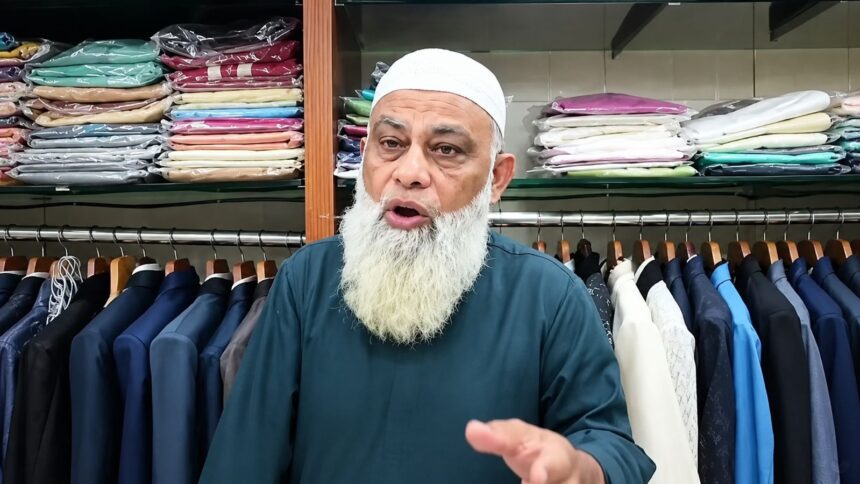

Recent incidents have raised serious concerns regarding communal targeting and police inaction in India, specifically affecting the Muslim community. A disturbing incident involving Rafat Hussain, a Muslim shopkeeper in Mumbai, highlights the growing tensions surrounding religious identity in urban India.
Incident Overview
The situation unfolded on a Saturday afternoon in Juhu, Mumbai, when Rafat Hussain, the owner of Mannat Ethnic Designer, found himself at the center of a deeply troubling encounter. Four women entered his boutique, ostensibly to inquire about wedding attire, but the conversation quickly devolved into verbal abuse and religious harassment. Hussain recalls that the women insulted him, making derogatory comments about his Muslim identity, stating, “You are a Muslim, you live in a certain way, and you do things in the wrong way.”
Escalation and Police Response
Feeling threatened by the hostile behavior, Hussain left his store and sought refuge at a nearby police station. His situation worsened as a large crowd, estimated at nearly 150 people, began to gather outside, chanting slogans often associated with communal strife. Hussain claims that a group of 20-25 young men attempted to force their way into the station to confront him. Despite the escalating situation, Husain alleges that police officers were hesitant to act against the women, ultimately filing a First Information Report (FIR) against him instead.
Community Reactions and Social Media Outcry
The incident gained traction online after a video of Hussain recounting his ordeal went viral. The video highlighted Hussain’s fears and his belief that the episode was premeditated, questioning how the women mobilized a crowd so swiftly. Community leaders and social media users expressed outrage, viewing this as another example of systemic discrimination faced by Muslims in India. They argue that such incidents signal a troubling trend of targeting based on religious identity in a climate of increasing polarization.
Why It Matters
This incident is emblematic of broader societal issues in India, where religious minorities, particularly Muslims, are often marginalized. The implications extend beyond individual cases to reflect systemic biases that may influence law enforcement and community interactions. For policymakers, understanding these dynamics is crucial for crafting effective responses to communal tensions and ensuring equitable treatment for all citizens. The incident also fuels ongoing discussions regarding religious identity, societal norms, and the role of social media in amplifying voices often sidelined in mainstream discourse.
Frequently Asked Questions
What happened to Rafat Hussain?
Rafat Hussain was verbally abused in his store by four women who allegedly targeted him for his Muslim identity and later faced hostility from a crowd outside the police station when he sought help.
What was the police’s response to the incident?
Despite Hussain’s account of being threatened, police reportedly filed an FIR against him instead of taking action against the women who harassed him, raising concerns about bias in law enforcement.
How did the incident gain public attention?
The incident gained widespread attention after Hussain shared his story in a viral video, prompting social media outrage over allegations of communal targeting and police inaction.
Why is this incident significant?
This incident is significant as it highlights ongoing tensions regarding religious identity in India and raises questions about systemic discrimination against Muslims, particularly in urban settings.