
Summary
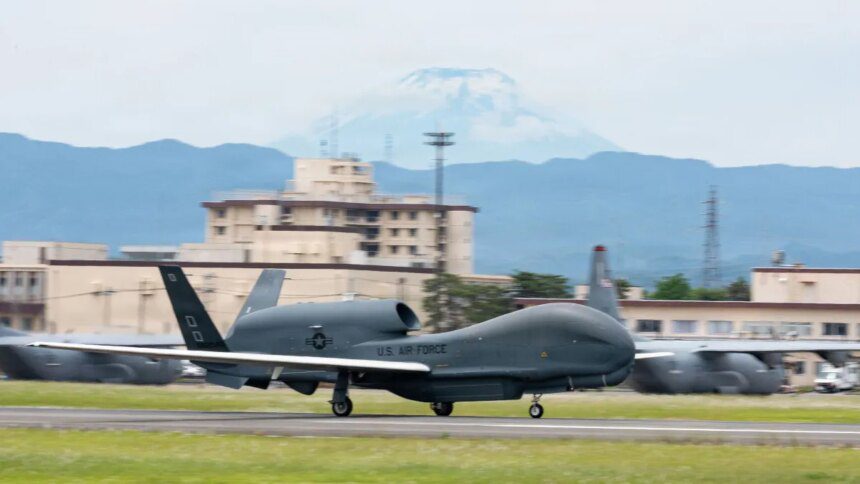
The U.S. Air Force is permanently relocating three RQ-4 Global Hawk surveillance drones from Guam to Yokota Air Base in Japan. This strategic move not only enhances military operations in the region but also signifies a shift in surveillance capabilities amidst evolving geopolitical dynamics in East Asia.
Significance of the Relocation
The relocation of the RQ-4 drones marks an important transition for the Air Force, which has had these surveillance platforms stationed in Guam for over a decade. The 4th Reconnaissance Squadron, part of the 319th Operation Group, began moving the drones to Japan in late May 2023, with the official announcement made by the 374th Airlift Wing recently. This decision plays a crucial role in strengthening the United States’ military presence in the Asia-Pacific, ensuring that surveillance operations are well-equipped to address emerging threats.
The Role of the RQ-4 Global Hawk
The RQ-4 Global Hawk is a formidable piece of military hardware, weighing nearly 15,000 pounds with a wingspan of 130.9 feet. Known for its ability to conduct continuous surveillance for over 30 hours at high altitudes, it houses advanced sensors and cameras designed to monitor large areas efficiently. Lt. Col. Adam Otten, the squadron commander, noted that Yokota Air Base is the ideal location for current and future operations, emphasizing the importance of enhancing the quality of life for Airmen and their families stationed there.
Weather Considerations and Future Operations
The Air Force highlighted weather conditions as a significant factor for the move to Japan. The region’s “more favorable weather” during typhoon season facilitates smoother operations, unlike Guam, which frequently deals with severe typhoons. The deployment reflects a shift in assets away from Guam, even as the U.S. military focuses on bolstering its infrastructure on the island. This includes enhanced missile defense systems and weapons depots, demonstrating a dual approach to military readiness in the Indo-Pacific region.
Why This Is Trending
With increasing tensions in the Indo-Pacific, particularly related to China’s expanding military capabilities and assertiveness in regional waters, the move of RQ-4 drones to Japan has sparked interest in India as well. Indian audiences are searching for updates on military developments involving major powers that influence their own strategic considerations. In the backdrop of India’s national security discussions, the U.S. deployment of advanced surveillance technology in nearby Japan is perceived as a game-changer, heightening the importance of regional alliances and response strategies.
Frequently Asked Questions
What are the capabilities of the RQ-4 Global Hawk?
The RQ-4 Global Hawk can conduct continuous surveillance for over 30 hours at altitudes of approximately 60,000 feet, equipped with advanced sensors and cameras for extensive area monitoring.
Why is the relocation significant for the U.S. military?
This relocation strengthens U.S. military operations in the Asia-Pacific, allowing for improved surveillance and response to emerging threats, particularly amid growing geopolitical tensions in the region.
How does this move impact regional security?
The deployment of drones to Japan enhances surveillance capabilities, which can offer crucial information to allied nations, thereby contributing to collective security efforts in the Indo-Pacific.
What is the historical background of the RQ-4 Global Hawk?
The RQ-4 has been in service for various reconnaissance missions since its introduction, with a significant presence in Guam for over a decade until the recent decision to permanently relocate its operational base to Japan.