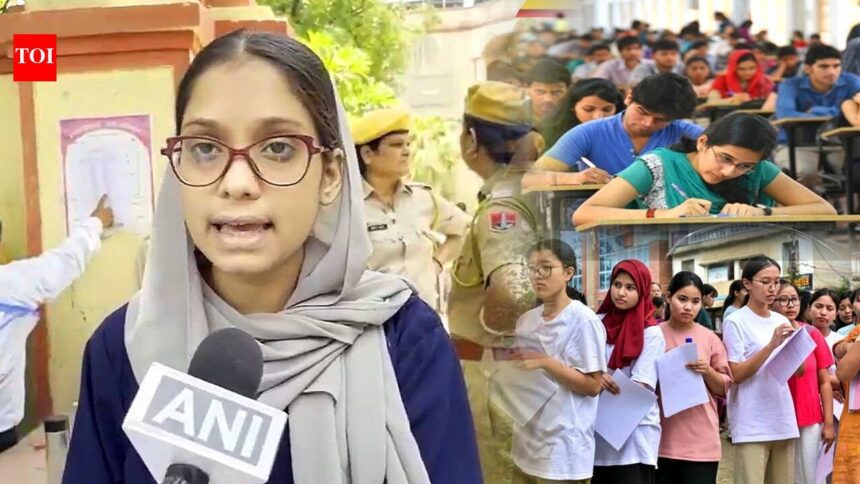

A recent incident at a NEET examination centre in Ajmer, Rajasthan, has highlighted ongoing issues of discrimination and social exclusion faced by Indian Muslims. Kulsum Bano, a burqa-wearing candidate, was denied entry unless she removed her traditional attire, raising questions about the intersection of dress codes and personal identity within educational settings.
The Incident: Burqa and NEET Examination Protocols
Kulsum Bano, who identifies her burqa as a significant aspect of her identity, reported that she had successfully participated in a previous NEET exam wearing the same attire. During the latest examination, however, she was approached and informed she could not enter unless she removed her burqa and dupatta. This unexpected turn of events has provoked her to question the consistency of policies applied by the National Testing Agency (NTA) across different exam sessions.
Context: Repeated Patterns of Exclusion
This incident is not an isolated case but part of a broader pattern where minority communities in India, particularly Muslims, face marginalization through enforced dress codes and cultural norms. Various reports have documented how the current political climate, influenced by the rise of Hindu nationalist narratives, has exacerbated these tensions, affecting the rights and freedoms of Muslims in educational and professional spaces. Incidents like Bano’s serve as stark reminders of how systemic biases can manifest in everyday situations, further entrenching societal divisions.
Public Reactions and Implications
The reaction to Bano’s experience has been twofold. On one side, her assertion that “My burqa is my identity” resonates with many who advocate for religious freedom and cultural expression. Advocacy groups have rallied to support her case, arguing that educational institutions must uphold inclusivity and respect individual identities. On the other hand, proponents of stricter dress codes argue that uniformity is necessary to maintain the sanctity and order of examination environments. This dichotomy of perspectives fuels the ongoing debate concerning the balance between personal expression and institutional regulation.
Why It Matters
The implications of this incident extend beyond the individuals involved; they reflect a significant challenge in India’s socio-political landscape. In a country marked by its diversity, the enforcement of uniform dress codes raises concerns about the erosion of personal freedoms and the marginalization of minority identities. As discussions about educational policies and their impact on student populations evolve, this incident underscores the urgent need for dialogue surrounding inclusivity, cultural sensitivity, and the preservation of personal rights in institutional frameworks.
Frequently Asked Questions
What is NEET?
The National Eligibility cum Entrance Test (NEET) is a national-level medical entrance examination in India, mandatory for students seeking admission to medical and dental colleges.
Why was Kulsum Bano denied entry to the exam?
Kulsum Bano was reportedly denied entry to the NEET exam because she was wearing a burqa and dupatta, which the examination officials insisted must be removed for her to gain entry.
What are the implications of this incident for Muslims in India?
This incident highlights ongoing challenges faced by Muslims in India regarding social acceptance and institutional policies, igniting discussions about discrimination, identity, and cultural rights within educational systems.
How have community organizations reacted?
Community organizations and advocacy groups have expressed solidarity with Kulsum Bano, emphasizing the need for respect for cultural identities and urging for a reassessment of dress code policies in educational institutions.