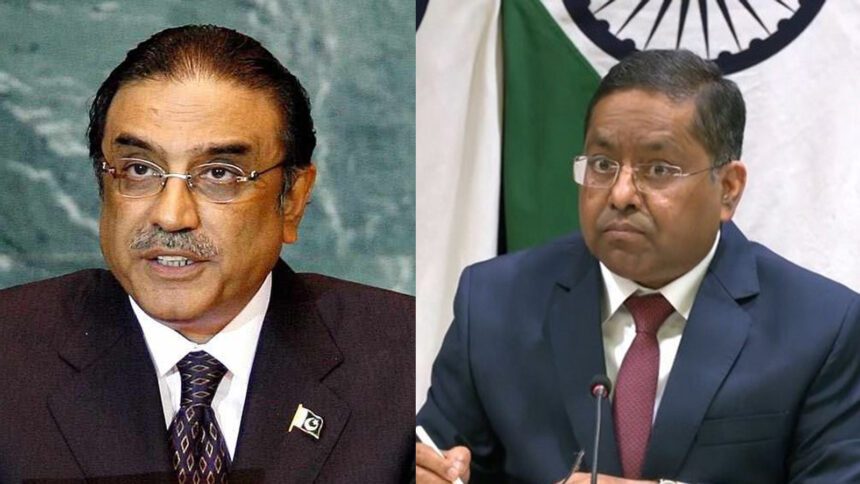

India has strongly criticized remarks made by Pakistani President Asif Ali Zardari concerning alleged threats to Muslim religious sites in India, labeling them as “absurd” and politically motivated. The Indian Ministry of Foreign Affairs emphasized that Pakistan lacks the standing to comment on India’s internal matters, citing its own poor human rights record in dealing with its religious minorities.
Political Context of the Dispute
On June 20, 2026, President Zardari took to the social media platform X to express deep concern regarding the preservation of historic Muslim religious sites in India, specifically mentioning the 1,000-year-old Masjid Ganj Shaheeda in Varanasi. He urged India to halt actions that threaten such sites, warning that these could lead to “disintegration and perennial chaos.” In response, Indian officials highlighted the irony of Zardari’s comments, stating that Pakistan’s long history of religious minority persecution undermines its credibility to comment on India’s situation.
Ministry spokesperson Randhir Jaiswal pointed out that Pakistan’s own “abysmal” human rights record, particularly towards its own religious minorities like Hindus and the Ahmadiyya community, raises doubts about its moral authority. His statements reflect a broader narrative where each nation attempts to deflect criticism while spotlighting the other’s challenges.
Discrimination Against Minorities in Pakistan
Over the years, numerous reports by human rights organizations have documented cases of religion-based violence in Pakistan. Such incidents often target Hindus, Christians, and the Ahmadiyya community, with attacks fueled by state-sanctioned persecution and draconian blasphemy laws. These issues complicate Pakistan’s international standing, as the global community increasingly scrutinizes its treatment of religious minorities.
While President Zardari’s concerns may resonate with a specific segment of the Pakistani population, the political backdrop is laden with a history of discord between the two nations. His previous accusations against India, including claims of preparing for war and calls for meaningful dialogue, indicate a pattern where both nations remain entrenched in their positions, often using media to project narratives that serve their political agendas.
The Broader Implications for India
The remarks from Zardari come at a time when India has been facing criticism domestically and internationally for its treatment of Muslim citizens. Many reports have highlighted instances of social exclusion, economic boycotts, and the marginalization of Muslims under the current political regime governed by the Bharatiya Janata Party (BJP) and associated organizations like the Rashtriya Swayamsevak Sangh (RSS).
These challenges are not only a matter of political discourse but resonate deeply within communities, impacting social fabric and national identity. The increased visibility of such issues, as mirrored in Zardari’s comments, highlights the growing global concern regarding religious freedoms and minority rights, particularly in regions marked by historical tensions.
Why It Matters
This ongoing discourse around minority rights in India and Pakistan is crucial for several reasons. It sheds light on the delicate balance each nation must navigate between national identity and minority rights. For the global community, these tensions are part of a larger narrative surrounding religious freedoms worldwide. The implications extend beyond politics; they influence international relations, global diplomacy, and even humanitarian efforts geared towards conflict resolution.
As observers and stakeholders evaluate the roles of various governments, understanding these dynamics becomes essential, not just to foster peace but also to ensure that the voices of all communities—particularly marginalized ones—are heard and respected.
Frequently Asked Questions
What did President Zardari express concern about?
He expressed concern regarding threats to historic Muslim sites in India, particularly the Masjid Ganj Shaheeda in Varanasi, urging India to halt potential demolitions.
How did the Indian government respond to Zardari’s comments?
The Indian Ministry of Foreign Affairs termed Zardari’s comments as absurd and politically motivated, emphasizing that Pakistan has no standing to comment on India’s internal matters.
What historical context contributes to the current tensions between India and Pakistan?
The longstanding historical conflict over territorial disputes, religious differences, and allegations of human rights violations, particularly towards minorities, continue to fuel tensions between the two nations.
Why is this issue significant for minority rights?
It underscores the ongoing challenges that religious minorities face in both India and Pakistan, revealing deep-rooted issues surrounding governance, human rights, and religious freedoms that are critical for international dialogue and relations.