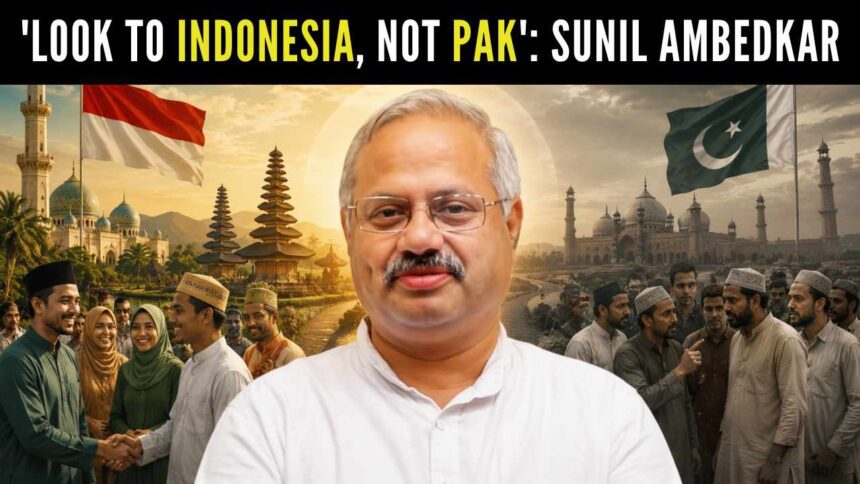

The ongoing Hindu-Muslim conflict in India, as highlighted by RSS leader Sunil Ambekar, underscores long-standing social divisions and calls for cultural unity. Ambekar’s remarks suggest a new approach for resolving these historical tensions, advocating for an acknowledgment of shared heritage while urging Indian Muslims to draw inspiration from Indonesia rather than Pakistan.
Context of Hindu-Muslim Relations in India
The Hindu-Muslim conflict in India has deep historical roots, influenced by centuries of social, political, and economic dynamics. Sunil Ambekar, the publicity chief of the Rashtriya Swayamsevak Sangh (RSS), addressed these complexities by affirming that “everyone shares the same DNA.” His comments seek to dissolve the notion that religious differences necessitate cultural or national separations.
According to Ambekar, the sectarian strife that culminated in the Partition of India in 1947 needs to be re-examined. He emphasized that the belief among some Muslims that changing religion could also change one’s national identity is fundamentally flawed. By promoting a narrative of shared history, the RSS aims to forge a united national identity, irrespective of religious affiliation.
Advocating for Indonesian Cultural Ideals
In a significant departure from traditional references, Ambekar proposed that Indian Muslims look to Indonesia — the country with the largest Muslim population — for cultural guidance rather than Pakistan. He highlighted Indonesia’s blend of Islam with Hindu-Buddhist influences as a model for social cohesion and cultural blending that contrasts sharply with the divisive notions often associated with Pakistan.
Ambekar’s remarks come at a time when some factions within the Indian Muslim community are seeking reform and unity, thereby reinforcing his assertion that positive change can emerge from discussions that prioritize common cultural ties over historical grievances.
Demographic Concerns and Policy Advocacy
In addition to addressing cultural relations, Ambekar touched upon demographic issues, referencing RSS leader Mohan Bhagwat’s stance on encouraging a three-child policy for Hindu families. He framed this advocacy within the context of maintaining demographic balance, contrasting it with other global trends such as those seen in Europe and China, which have reversed strict population control measures.
Ambekar warned that demographic changes could potentially threaten India’s identity and cultural fabric if not managed thoughtfully. This perspective highlights the RSS’s broader objective of fostering a demographic equilibrium that aligns with their vision of national identity, particularly in a multicultural landscape like India.
Why It Matters
The remarks by Ambekar and the RSS carry significant implications for social dynamics in India and beyond. They signal an attempt to reframe Hindu-Muslim relations through shared heritage, which could potentially lead to reduced tensions and foster inter-community dialogue. Moreover, this discourse seeks to address demographic anxieties in a context where identity politics often overshadow collective narratives.
For the AI industry and developers, understanding these socio-political narratives can inform user engagement strategies and content moderation practices. By recognizing the complex interplay of identity and community sentiments, AI developers can better tailor their algorithms to reflect the nuances of social discourse, mitigating polarization and fostering dialogue.
Frequently Asked Questions
What is the RSS and its role in Indian society?
The Rashtriya Swayamsevak Sangh (RSS) is a Hindu nationalist volunteer organization in India, known for advocating Hindu values and cultural nationalism.
What did Sunil Ambekar propose regarding Hindu-Muslim relations?
Ambekar proposed an end to the Hindu-Muslim conflict by emphasizing shared ancestry and encouraging Indian Muslims to adopt cultural ideals from Indonesia rather than Pakistan.
Why did Ambekar emphasize demographic balance?
Ambekar stressed demographic balance as crucial for maintaining India’s identity and cultural fabric, arguing that past demographic changes contributed to the Partition of India.
How can Ambekar’s comments influence community relations?
By promoting a narrative of shared heritage, Ambekar’s comments could lead to enhanced dialogue and cooperation between communities, potentially easing historical tensions.