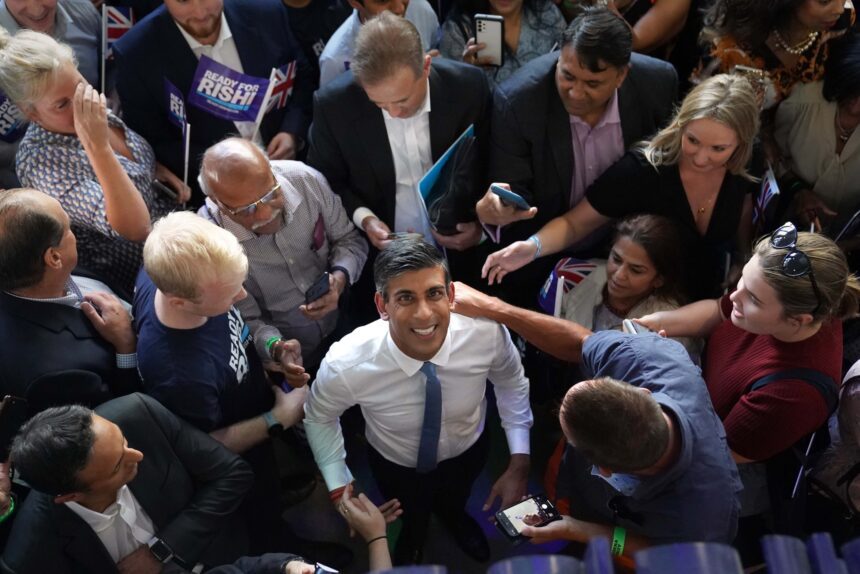

Rishi Sunak’s ascent as the UK’s first Asian prime minister has stirred significant interest in India, particularly due to his public expressions of Hindu cultural practices. Despite the celebratory reactions from some quarters, critics argue that Sunak’s political actions do not diverge from traditional conservative politics, raising important questions about his wealth and its implications for social equality.
Sunak’s Cultural Connections
In recent months, Rishi Sunak, alongside his wife Akshata Murty, has captured the attention of many in India. His visits to Hindu temples and practices, such as worshipping a cow, resonate with millions and reflect aspects of his Indian heritage. Social media has amplified this connection, with Indian audiences expressing admiration for his embrace of cultural traditions that align with Hindu beliefs.
As he took office, Sunak emphasized his cultural background, showcasing a ceremonial Hindu thread on his wrist during his inaugural speech. Additionally, the presence of a Hindu idol on his desk prompted further analysis of his identity and its implications for British politics—a marked shift from previously prevailing demographics in UK governance.
The Wealth Gap Debate
Despite the wave of admiration from India, Sunak’s immense wealth—estimated at over $800 million, largely derived from his wife’s family business—has incited criticism regarding the UK’s growing wealth disparity. Reports suggest that millions of Britons, particularly from ethnic minority communities, are struggling to meet basic needs amid an economic crisis. This backdrop raises uncomfortable questions about representation and social equity in political leadership.
Cultural commentators have noted the dissonance between Sunak’s financial status and the realities faced by the majority of the UK population. Dalia Gebrial, a British academic, argues that Sunak’s political rise is intertwined with historical advantages gained during the British Raj, drawing attention to the entrenched inequalities that persist in social and political structures today.
Criticism of His Political Stance
While some view Sunak as a potential harbinger of change within the Conservative Party, others remain skeptical. Critics point to Sunak’s conservative policies, which are seen as perpetuating inequalities rather than challenging the status quo. His track record includes anti-immigration stances and fiscal conservatism, which some argue are hindrances to progress for marginalized communities.
Experts warn against celebrating Sunak purely for his ethnic background, suggesting that his political ideologies align with the interests of a privileged elite. The existence of upper-caste privilege in India complicates the narrative surrounding his ascent, as it intertwines with socio-economic factors and historical injustices.
Why This Matters
The political implications of Sunak’s leadership extend far beyond British borders. For Indians, especially those concerned with social justice, his rise prompts reflection on the intersection of caste, race, and wealth. Sunak represents a specific narrative that, while celebrated by some, risks glossing over historical injustices and existing societal divides.
Moreover, understanding Sunak’s tenure in the context of both British and Indian histories can provide a critical lens on contemporary issues such as migration, class struggle, and post-colonial identities. As he navigates his role, the reactions from India serve as a reminder of the complex legacy of colonialism and its ongoing effects in modern governance and societal hierarchies.
Frequently Asked Questions
What cultural practices has Rishi Sunak embraced publicly?
Sunak has participated in civil rituals like visiting Hindu temples and worshipping a cow, which resonates with Hindu traditions. His public displays of cultural heritage have garnered significant attention from Indian audiences.
What is the significance of Sunak’s wealth?
Sunak’s substantial net worth has sparked discussions about wealth disparity in the UK, especially as many face economic hardships. Critics argue that his financial background may disconnect him from the realities of the average Briton.
How does Sunak’s rise affect perceptions of race in British politics?
Sunak’s leadership symbolizes an evolving landscape in terms of racial representation within the Conservative Party. However, critics caution against equating his ethnicity with progressive politics, citing his conservative policies that may not benefit marginalized communities.
What historical factors shape Sunak’s political identity?
Sunak’s background reflects a legacy intertwined with colonial history, as his family benefited from advantages linked to British imperialism. This historical context complicates the contemporary narrative of his rise in British politics.