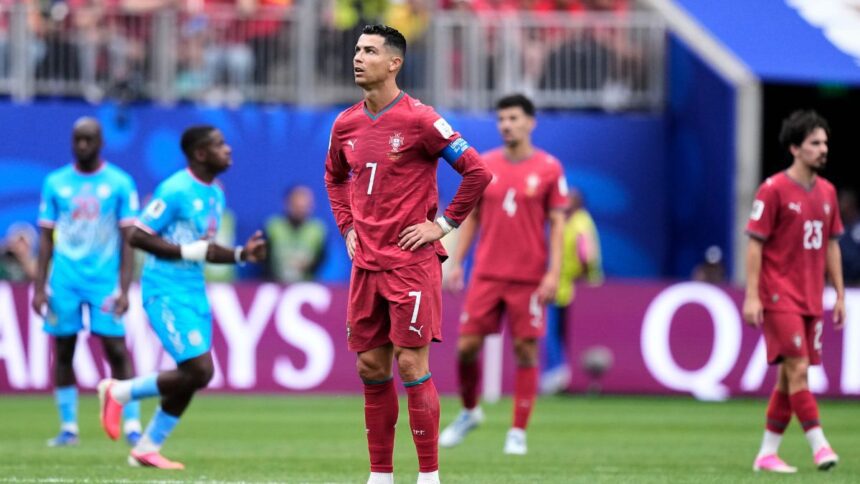

In a gripping encounter at the 2026 FIFA World Cup, Portugal was held to a 1-1 draw by the Democratic Republic of Congo in their opening match, played at the NRG Stadium in Houston. Despite dominating possession, Portugal struggled to convert opportunities into goals against Congo’s resolute defense.
Portugal’s Initial Dominance
Portugal came out strong, taking the lead early in the match. Joao Neves scored in the 6th minute, capitalizing on an impressive low cross from Pedro Neto. This early goal set a positive tone for the Portuguese side, who maintained control of the midfield, thanks to the efforts of Bruno Fernandes and Vitinha.
Although they enjoyed 72% possession in the first half, Portugal faced a well-organized Congo that effectively closed off central areas, forcing them wider. This tactical approach paid off just before halftime, when Yoane Wissa scored from a corner, leveling the score. Despite Portugal’s dominance in possession, they only managed two shots on target in the first half.
Congo’s Resilience and Tactical Acumen
As the second half progressed, the match followed a similar pattern, with Portugal attempting to break down a disciplined Congo defense. The African side, showcasing impressive tactical awareness, remained a threat on the counter-attack. In a dramatic moment, substitute Cedric Bakambu nearly secured victory for Congo but shot narrowly wide.
Ultimately, the statistics reflected Portugal’s frustration, finishing the match with 14 shots yet only four on target. Congo’s disciplined structure held firm, indicating the strength of African teams in the global arena, which is increasingly relevant as their presence in international tournaments grows.
Cristiano Ronaldo’s Underwhelming Performance
One of the most talked-about aspects of the match was Cristiano Ronaldo’s performance, which drew criticism. Struggling to find space and frequently isolated from his midfield, Ronaldo had a muted effect on the game. Despite playing centrally, he failed to register a goal or assist and was consistently marked well by Congo’s defenders.
His most notable moment was a late header from a corner that was easily saved, encapsulating a disappointing outing for the veteran forward. In a post-match reflection shared on social media, Ronaldo expressed his frustration but remained focused on future matches: “Not the start we wanted, but this is far from over. Head up and focus on the next game,” he said.
What This Means
This match serves as a reminder of the unpredictability of football, particularly in World Cups, where any team can rise to the occasion. For Indian fans, the draw highlights the growing competitiveness of teams from Africa, a sentiment echoed in the Indian football community. As Indian football develops, matches like these can inspire local talents and showcase the importance of strong tactical setups, perseverance, and resilience, pivotal qualities that fans can appreciate and learn from.
Frequently Asked Questions
What teams are in Group K for the 2026 FIFA World Cup?
Group K includes Portugal, Democratic Republic of Congo, and other teams, with each match impacting the qualification process for the knockout stage.
How did Portugal perform in their opening match?
Portugal dominated possession but could only manage a 1-1 draw against Congo, struggling to convert their chances into goals.
What does Cristiano Ronaldo’s performance mean for his future?
Ronaldo’s underwhelming display raises concerns about his ability to influence crucial matches, but his determination to improve could lead to a resurgence in future games.
Why is the draw significant for African football?
This draw highlights the growing competitiveness of African teams in international tournaments, emphasizing their ability to challenge traditional football powerhouses effectively.