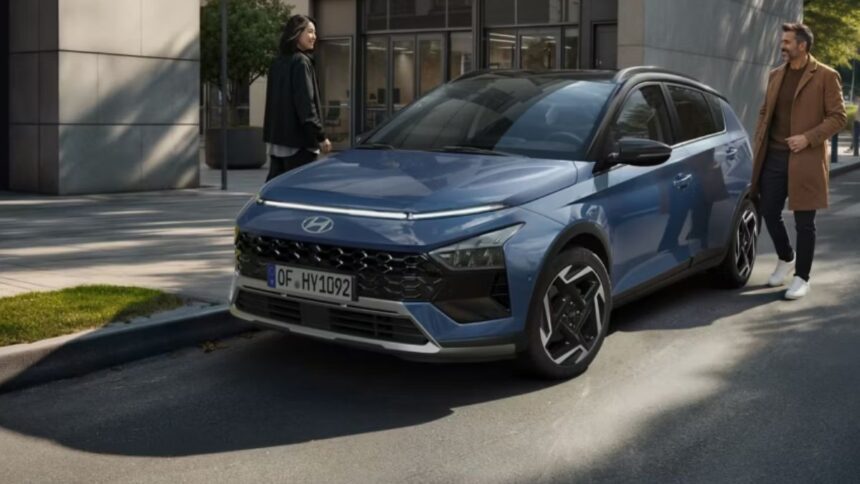

Hyundai is gearing up to launch the next-generation Bayon, a compact crossover SUV aimed at key markets including Europe, the Middle East, and India. Currently undergoing testing, the Bayon promises significant updates in design, technology, and engine efficiency that could cater to the evolving preferences of Indian consumers.
Sporty Design and Enhanced Features
The upcoming Bayon showcases a more muscular and aggressive design compared to its predecessor. With an estimated length of around 4,200mm, it is larger and more distinct in its SUV aesthetics.
Key features that stand out include:
- Angular LED daytime running lights
- Vertical headlamps
- A large black grille with horizontal slats
- A sculpted bonnet for a sportier profile
- Flush door handles, enhancing the sleek look
- Dual-tone alloy wheels
- Blacked-out roof pillars, adding to its modern appeal
- Robust cladding on wheel arches and body
- A sharply rising window line for an elegant silhouette
At the rear, Hyundai plans to introduce revised LED taillamps and an upgraded tailgate design, potentially providing additional luggage space—an attractive feature for Indian families and frequent travelers.
Advanced Interior with Cutting-Edge Technology
The interior of the next-gen Bayon promises to be both modern and functional, equipped with two 12.3-inch screens. Although it may not incorporate Hyundai’s latest infotainment tech, the cabin will still feature several high-end touches aimed at enhancing the driving experience.
Among the expected highlights are:
- Two digital display screens for a modern dashboard look
- Wireless Android Auto and Apple CarPlay for seamless connectivity
- Over-the-Air software updates, keeping the system current
- Convenient wireless charging options
- Ambient lighting for a comfortable atmosphere
- A head-up display for crucial driving information
- Keyless entry with push-button start for added convenience
Hyundai maintains physical buttons for essential controls, ensuring a user-friendly experience while driving—an important consideration for the Indian market where distraction while driving is a concern.
Commitment to Safety and Environmental Standards
With the Bayon transitioning to an updated K-platform, Hyundai aims to enhance overall vehicle rigidity, ride comfort, and crash protection. This is particularly relevant as India moves towards stricter safety regulations for vehicles.
Safety features expected in the Bayon include:
- Level 2 Advanced Driver Assistance Systems (ADAS)
- Adaptive cruise control for improved long-distance driving
- Lane-keeping assist to prevent unintentional drifting
- Automatic emergency braking for enhanced protection
- Blind-spot monitoring to mitigate accidents
- Multiple airbags for passenger safety
Hyundai is aiming to surpass the current Bayon’s four-star Euro NCAP rating by focusing on improving safety features—a point valued by Indian consumers who prioritize safety in their vehicle purchases.
Expected Hybrid Powertrains for Enhanced Efficiency
An exciting change for the new Bayon includes the introduction of hybrid powertrains, aligning with the global shift towards sustainability.
Anticipated powertrain options include:
- 1.2-litre turbo petrol mild-hybrid engine featuring 48V technology for improved fuel efficiency and lower emissions
- A full hybrid setup generating around 140hp paired with a 7-speed dual-clutch transmission, providing both performance and economy
This represents Hyundai’s proactive approach in meeting increasingly stringent emissions regulations in both India and global markets.
What This Means
The launch of the next-gen Bayon in India could significantly impact the burgeoning SUV market. Positioned between the Venue and Creta, it aims to attract a demographic looking for stylish and tech-savvy features alongside hybrid capabilities. Given the growing trend towards eco-friendliness and advanced safety in the Indian car buying market, the Bayon’s launch is timely and aligns with consumer expectations.
Frequently Asked Questions
When is the expected launch date for the Hyundai Bayon in India?
The global debut is scheduled for late 2026, with a market launch expected in early 2027 in India.
What are the expected engine options for the Bayon?
The Bayon is anticipated to come with a 1.2-litre turbo petrol mild-hybrid engine and a full hybrid powertrain generating around 140hp.
How does the Bayon compare in size to the current model?
The new Bayon is designed to be larger, measuring approximately 4,200mm in length, enhancing its SUV stature compared to its predecessor.
What safety features can we expect in the Bayon?
Expected safety features include Level 2 Advanced Driver Assistance Systems (ADAS), adaptive cruise control, lane-keeping assist, and multiple airbags.