
Summary of Claims
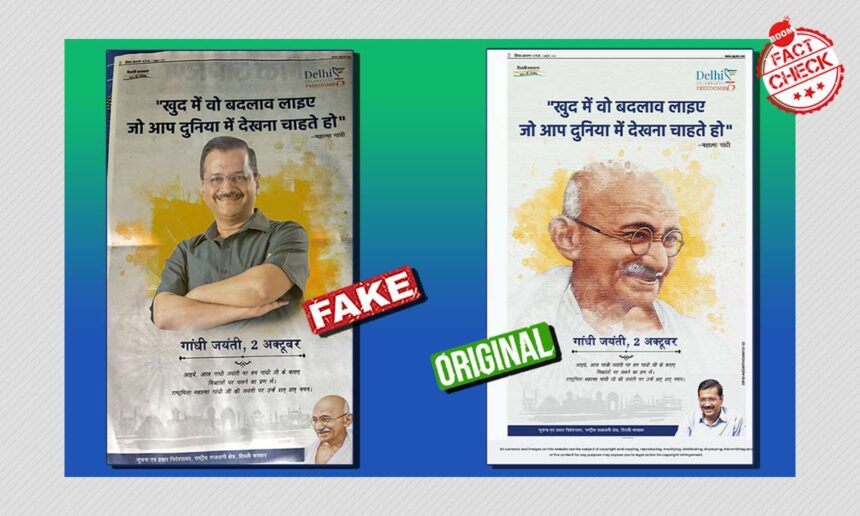
A circulated image purporting to show Delhi Chief Minister Arvind Kejriwal’s photo significantly larger than Mahatma Gandhi’s in a newspaper advertisement marking October 2, is identified as fake. Fact-checking organization BOOM confirmed that the original ad from Dainik Jagran features Mahatma Gandhi’s image prominently, countering the claim of manipulation.
Context of the Claims
The viral post emerged on October 2, 2021, which marks Mahatma Gandhi’s birth anniversary, commonly referred to as Gandhi Jayanti. In India, Gandhi Jayanti is a prominent day celebrated across the nation in honor of the key figure of the Indian independence movement. The image claims to depict a newspaper advertisement that has supposedly edited Kejriwal’s photograph to overshadow that of Gandhi, a figure of national importance. This incident raises questions about authenticity in political discourse, particularly in the digital age where misinformation can spread rapidly.
Investigation and Findings
Upon investigation, BOOM confirmed that the image widely shared is edited. By checking the original advertisement in Dainik Jagran’s e-paper edition for Delhi on the same date, it became clear that Mahatma Gandhi’s photo was larger than that of Chief Minister Kejriwal, as some Twitter users pointed out by posting images of the original ad. Furthermore, the Aam Aadmi Party’s official Twitter account corroborated this, labeling the viral image as morphed and sharing the authentic advertisement, demonstrating the growing necessity for verifying the authenticity of shared images in political contexts.
Political Implications
This incident underscores a broader concern regarding the dissemination of misinformation in Indian politics. The potential for fake news to alter public perception cannot be overstated, especially surrounding significant national figures such as Mahatma Gandhi. As political narratives evolve, the capacity for misinformation to misguide voters poses a risk not only to individual political careers but also to the democratic framework. The trend of manipulations, especially around cultural and historical icons, reflects the challenges faced by political opponents and the electorate in discerning truth from falsehoods.
Why This Matters
The integrity of political discourse is paramount in democratic societies, and the current era is marked by the rapid spread of misinformation through digital platforms. This incident not only highlights the specific manipulation of images for political gain but also points to the necessity of media literacy among voters. In a landscape where every image could have profound implications for public perception and electoral outcomes, ensuring that citizens are able to critically assess the authenticity of the information they encounter becomes essential. The stakes are high for Indian democracy, especially as it navigates complex political dynamics and the legacies of historical figures.
Frequently Asked Questions
Is the viral image of Arvind Kejriwal’s advertisement authentic?
No, the viral image has been verified as edited. The original advertisement shows Mahatma Gandhi’s photograph more prominently than that of Chief Minister Arvind Kejriwal.
What does the original advertisement from Dainik Jagran depict?
The original advertisement includes a larger image of Mahatma Gandhi, affirming his importance, especially on his birth anniversary.
Why is misinformation like this problematic in politics?
Misinformation can distort public perceptions and influence voter behavior, ultimately undermining democratic processes and the integrity of political discourse.
How can the public verify such claims in the future?
Utilizing credible fact-checking organizations, corroborating images with original sources, and maintaining digital literacy are effective ways to verify claims about political information.