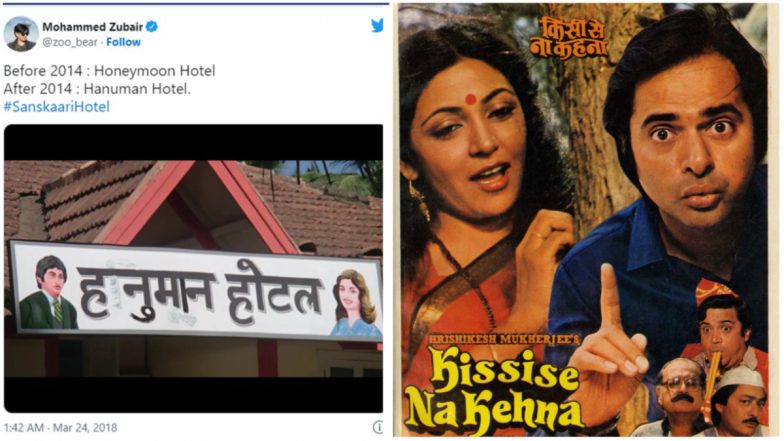

The arrest of Alt News co-founder Mohammed Zubair has ignited widespread discussion about freedom of expression in India, particularly in the context of a 2018 tweet referencing the film Kissi Se Na Kehna. Zubair was detained based on a tweet perceived as derogatory towards religious sentiments, leading many to question the implications for political discourse and satire in the country.
Context of the Arrest
On June 27, 2022, Mohammed Zubair was arrested by the Delhi Police following a First Information Report (FIR) that accused him of posting a tweet deemed “highly provocative.” This tweet featured an image from the movie Kissi Se Na Kehna, originally released in 1983. The FIR claims the tweet has the potential to incite communal hatred, linking it to a complaint from a user identifying as a supporter of Lord Hanuman. This marked a notable escalation in actions against journalists and critics of the government.
Political Climate in India
The arrest sparked outrage across social media, highlighting the challenges faced by journalists and dissenters in the context of rising religious nationalism. Zubair’s tweet, which humorously contrasted the original name “Honeymoon Hotel” with “Hanuman Hotel,” ignited a broader debate over censorship and the role of satire in political commentary. Supporters pointed out that the image’s reference to a classic film should not warrant legal repercussions, emphasizing the absurdity of arresting someone for referencing a work of art.
Analyzing Public Reactions
Public response to Zubair’s arrest has been predominantly critical of state overreach. Many users on social media have questioned the decision to prosecute him while simultaneously defending the legacy of Hrishikesh Mukherjee, the late filmmaker responsible for the movie from which Zubair cited an image. Tweets have circulated expressing disbelief that a cultural artifact from the 1980s could lead to contemporary legal action against a journalist, emphasizing a perceived disconnect between artistic expression and modern political dynamics.
Why This Matters
The significance of Zubair’s arrest extends beyond individual freedom of expression; it symbolizes the current political climate in India, where dissent is increasingly stifled. Many perceive this arrest as a harbinger for a chilling effect on journalists who engage in politically sensitive topics. With increasing scrutiny of social media discourse, the implications for democracy and free speech are dire, sending a troubling signal about the state of civil liberties in the country.
Frequently Asked Questions
Who is Mohammed Zubair?
Mohammed Zubair is the co-founder of Alt News, a prominent fact-checking organization in India, known for debunking misinformation and fake news.
What was the content of Zubair’s controversial tweet?
Zubair’s tweet included a photo of a sign that read “Honeymoon Hotel,” which had been altered to “Hanuman Hotel,” and he contrasted the two names in a humorous context.
What implications does Zubair’s arrest have for journalists in India?
His arrest raises concerns about the safety of journalists and the freedom to discuss political and social issues in the country, potentially leading to self-censorship among media professionals.
How have people reacted to this incident?
A significant portion of the public has reacted with outrage and disbelief, viewing the arrest as an attack on free expression and a troubling indication of how dissent is being treated in India.