
Summary
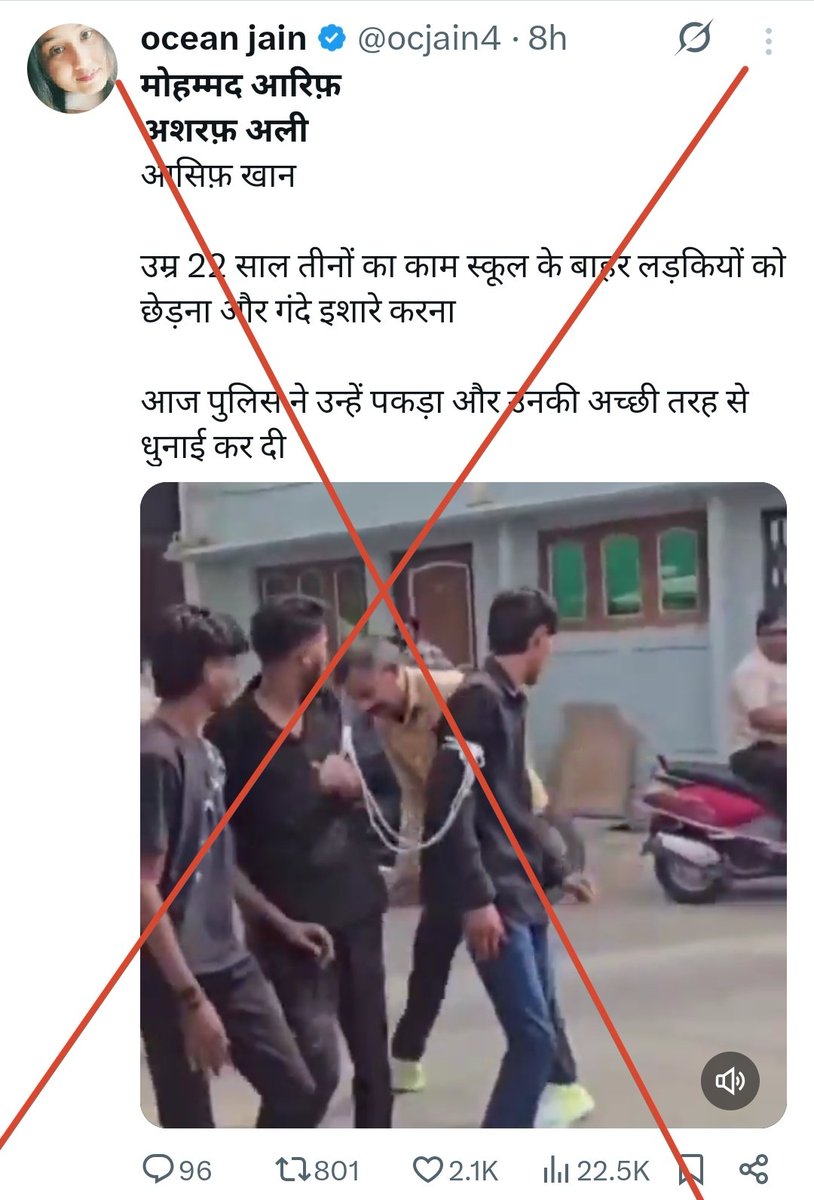
Recent reports highlight the troubling trend of influential right-wing accounts spreading fake news targeting Muslims in India. This narrative appears to gain traction within political circles, particularly among the Bharatiya Janata Party (BJP), as those perpetuating misinformation seem to be increasingly welcomed at official functions and gatherings.
Background on the Incident
In April, a significant event occurred when a group of individuals engaged in hooliganism, resulting in property damage. The incident involved the pelting of stones at houses and vehicles, causing substantial harm to both. The police responded by arresting three individuals—Kishan, Vikas, and Ramesh—who were allegedly involved in the acts of vandalism. The police later took these accused to the scene to investigate the situation further.
While certain narratives have emerged linking this incident to a larger agenda involving the harassment of girls and attributing blame specifically to Muslim individuals, these claims have been widely challenged. The facts indicate that the individuals arrested do not belong to the Muslim community, contradicting the narrative being circulated by some online commentators.
Influence of Right-Wing Accounts
The rise of social media has empowered various groups to disseminate information quickly, often without verification. Right-wing accounts on platforms such as Twitter have been particularly vocal in sharing content that portrays Muslims in a negative light. The sharing of misinformation not only foster divides but also serves to bolster political narratives that resonate with certain voter bases.
As the BJP gains popularity, the connection between these accounts and the party becomes more evident. Prominent figures in right-wing media seem to enjoy increased visibility and support when they propagate these messages, as seen by invitations to official events and functions. This potentially creates an environment where misinformation is normalized and politically rewarded, raising questions about accountability in political discourse.
The Role of Political Narratives
Political narratives surrounding religion and citizenship have long been a contentious issue in India. The strategy of using religion as a political tool has been apparent over the years, with various parties exploiting communal tensions to rally support. In this case, the spread of fake news targeting Muslims not only serves to distract from the actual events but also shifts the focus towards communal conflict.
This politically charged atmosphere presents risks, including inciting violence and perpetuating stigmas against specific communities. Citizens must navigate these narratives critically, particularly in a sociopolitical landscape where misinformation can have grave consequences for communal harmony.
Why This Matters
The significance of this issue extends beyond the immediate incident of vandalism. The acceptance of misinformation in political circles poses a threat to democratic values and social cohesion in India. As influential accounts continue to wield power through the spread of fake news, there exists a potential for heightened tensions between different communities. This polarization can have detrimental effects on national unity and the spirit of inclusivity that many hope to uphold in a diverse society like India.
Furthermore, political entities cooperating with or endorsing these narratives may undermine public trust in leadership, leading to a disconnection between the government and its constituents. In a country where diverse voices coexist, promoting misinformation can significantly alter the fabric of public discourse.
Frequently Asked Questions
What was the incident that sparked this controversy?
In April, a group engaged in hooliganism, causing property damage through stone-pelting. The police arrested three individuals linked to this incident but did not identify them as Muslims, contradicting emerging narratives.
Why are right-wing accounts sharing fake news about this incident?
These accounts often aim to propagate specific political narratives that resonate with certain voter segments, particularly those who may harbor prejudices against specific communities.
How does this influence the BJP and their support?
The BJP has been observed inviting individuals propagating such narratives to official functions, which suggests a political benefit associated with spreading misinformation that aligns with their agendas.
What are the risks of spreading fake news in this context?
Spreading misinformation can incite violence, polarize communities, and undermine democratic values in India, complicating the ongoing fight for social cohesion amidst diversity.