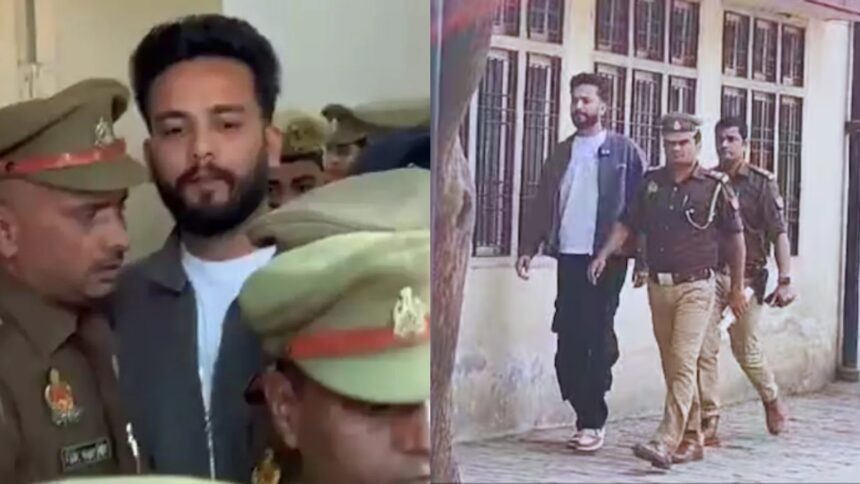

Bigg Boss winner Elvish Yadav has been arrested by Noida Police in connection with a case involving snake venom. He was taken into custody after questioning and has been placed in 14-day judicial custody, alongside five others, under the Wildlife (Protection) Act and relevant sections of the Indian Penal Code.
Details of the Arrest
Elvish Yadav’s arrest comes after a new round of police interrogation linked to a sting operation conducted by Maneka Gandhi’s organization, People for Animals. The sting aimed to expose the illegal trade of wildlife and the misuse of rare animal products. Yadav was not initially present at the party where the allegations arose, which took place on November 3, 2023.
He has previously denied the accusations but has reportedly assisted in providing contacts for procuring snake venom. Following a forensic investigation, the authorities confirmed that venom from cobra and krait species was used at the party, leading to the severe charges against him and the others involved.
Background on the Wildlife Case
The incident has received significant media attention, partly because of its shocking nature and the involvement of a popular figure like Yadav. At the gathering in Noida’s Sector 51, nine snakes were confiscated, all of which had their venom glands and teeth removed. This further indicates severe animal welfare violations that are of increasing concern in India.
The sting operation was set up to highlight the misuse of rare animals and combat illegal wildlife trafficking. This matter reflects broader societal issues regarding wildlife conservation laws and their enforcement in India. The presence of public figures in such scandals amplifies the urgency of addressing these problems at a national level.
Public and Media Reaction
The public’s reaction to Elvish Yadav’s arrest has been mixed. Social media commenters have expressed confusion over the rapid escalation of charges during police interrogation, as noted in a tweet by political commentator Mohammed Zubair. Some users are skeptical of the process, questioning whether due procedure was followed in his arrest.
The case is stirring discussions about the intersection of celebrity culture and wildlife laws in India. As a prominent figure, Yadav’s involvement raises questions about accountability and the role of influencers in promoting responsible behavior towards wildlife and the environment.
Why This Matters
This case holds significant political implications in India, emphasizing the enforcement of wildlife protection laws. The involvement of a celebrity underscores the necessity for public figures to act as role models in the face of important social issues. Furthermore, it shines a light on the illegal wildlife trade, demonstrating that even well-known individuals are not immune to the law.
The government’s response and the legal outcomes of this case will likely set precedents for future wildlife protection efforts. With increasing international scrutiny on India’s wildlife conservation practices, the outcome may influence both domestic and global perspectives on the country’s commitment to protecting its biodiversity.
Frequently Asked Questions
What are the primary charges against Elvish Yadav?
Elvish Yadav has been charged under the Wildlife (Protection) Act and Section 120A of the Indian Penal Code, related to criminal conspiracy for allegedly providing snake venom for illegal use at a party.
What evidence led to Yadav’s arrest?
The arrest followed a forensic investigation which revealed the presence of illegal snake venom at the gathering, alongside the testimony from a sting operation carried out to uncover wildlife trafficking.
What has been the public’s response to the arrest?
Public reaction has been mixed, with some questioning the handling of the case by authorities. Many have expressed skepticism about how the charges escalated during interrogation.
Why is this case significant for wildlife conservation in India?
This case highlights significant issues within India’s wildlife conservation efforts and raises awareness about illegal wildlife trade practices, prompting discussions about better enforcement of existing laws.