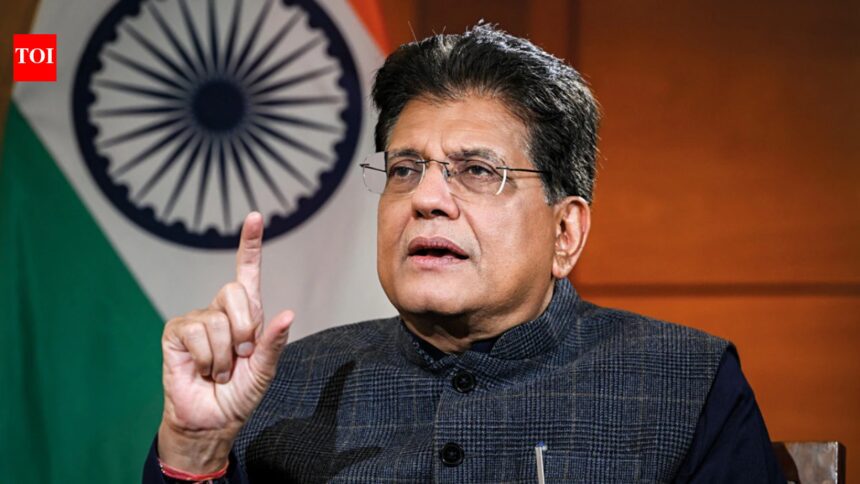

NEW DELHI/MUMBAI: Amid a depreciating Indian rupee, Commerce and Industry Minister Piyush Goyal announced on Thursday that the government is contemplating various measures to manage the widening current account deficit (CAD).
“We are monitoring the situation. All the various arms of the government are working as a team. Several steps are under consideration. The global situation is quite challenging, but we have the confidence and courage of conviction that we will emerge successful even during these tough times,” Goyal told reporters.
While emphasizing that there are no plans to reduce non-essential imports, the minister encouraged the public to be more mindful of products that depend on imports.
Recently, Prime Minister Narendra Modi urged citizens to postpone gold purchases and avoid overseas destination weddings. Gold imports surged by 24% to a record high of $72 billion in the last financial year, even though volumes declined by 4.8% to 721 tonnes. Additionally, silver imports increased by 150%, amounting to $12 billion last year, with volumes rising 42% to 7,335 tonnes. In response, the government has raised the import duty from 6% to 15%.
Crisil economists, led by DK Joshi, have projected that India’s CAD is expected to rise to 2.2% this fiscal year from an estimated 0.8% last fiscal year, primarily due to a mounting oil trade deficit and anticipated pressure on remittances from West Asia.
The trade deficit was exacerbated by soaring gold and silver prices last year, while the ongoing West Asia conflict and the exit of portfolio investments have significantly weakened the rupee, which was close to the 97-mark against the dollar on Wednesday. However, on Thursday, it ended 62 paise higher at 96.20, supported by central bank intervention and a decline in crude oil prices. The Indian rupee has depreciated about 7% so far in 2026 and is among the worst performers in Asia.
Market dealers noted that the rupee opened 50 paise stronger and gained momentum due to substantial duty interventions by public sector banks on behalf of the Reserve Bank of India (RBI). Jateen Trivedi, a research analyst at LKP Securities, stated, “The recovery in rupee is currently being driven more by profit-booking and softer crude prices rather than any major structural reversal; however, lower oil prices can continue to provide temporary relief to the currency.”
A weak rupee presents challenges for imports, particularly crude oil, as it can exacerbate domestic inflation. “This external energy shock has disrupted the macroeconomic landscape and kept the rupee under pressure. Compared to previous crises, India’s external balances are starting from a significantly stronger position, especially concerning current account stability and foreign exchange reserves,” noted DBS economist Radhika Rao and forex strategist Philip Lee in a recent report.