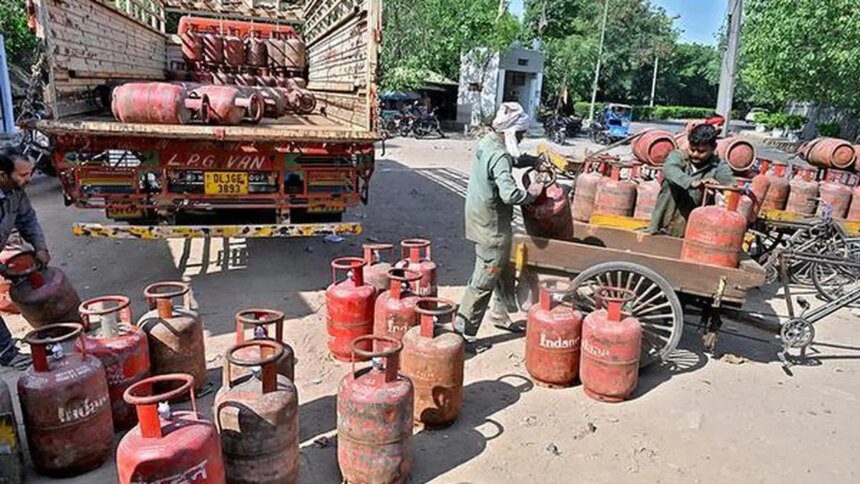

The closure of the Strait of Hormuz (SoH), responsible for nearly two-thirds of India’s liquefied petroleum gas (LPG) supply, has led to significant disruptions in cargo shipments of this essential cooking fuel. During March-April 2026, imports saw a decline of 430,000 barrels per day (kb/d).
The International Energy Agency (IEA) recently highlighted the repercussions of the West Asia conflict on LPG flows, noting that the situation has triggered an unprecedented global energy crisis. Central to this crisis is LPG, which serves as the primary cooking fuel for around 3.4 billion people in the developing world. By 2025, 30 percent of all seaborne LPG exports passed through the SoH.
According to the IEA, “India’s LPG imports have been particularly affected, dropping by more than half over the first two months of the conflict, a loss of around 430 kb/d.” In response, the Indian government has directed domestic refineries to maximize LPG production, contributing an estimated additional 180 kb/d. Furthermore, demand-side measures have been implemented to mitigate the impact on household cooking.
Companies have begun to source supplementary supplies from alternative regions; however, a vessel from the United States requires approximately 40 days to arrive in Mumbai, compared to just 4 to 5 days from the Strait of Hormuz. India’s storage capacity for LPG covers a little over 10 days of consumption, leaving limited options during supply disruptions. The fallout has resulted in commercial consumers struggling to access pre-conflict LPG volumes, while both commercial and household consumers face significantly increased prices in unregulated markets.
In March 2026, the IEA reported an 80 percent decline in LPG shipments through the SoH as shipping flows were severely impacted by the ongoing conflict in the Middle East. Average exports through the strait plummeted from 1.5 million barrels per day (mb/d) in 2025 to only 0.3 mb/d. Nearly all LPG exported from the Middle East in 2025 was directed to Asia, with almost 60 percent meeting the cooking needs of households, restaurants, street food vendors, and other establishments—sufficient to serve approximately 820 million people.
The remaining LPG was primarily used for water heating and as a feedstock for the petrochemical industry, a sector largely controlled by China, which can adapt to more economical alternatives when necessary. The IEA noted, “Known damage to LPG-related infrastructure sites in Qatar, Oman, and Iran has already resulted in a production loss of around 170 kb/d.” Additionally, eight more LPG-related sites in the region have reportedly sustained damage, though the full extent of this impact remains undetermined.
Furthermore, prices for LPG imports surged sharply in March, with rates in India and East Africa reaching 90 percent above their 2025 averages, while West Africa saw a rise of 70 percent above its average.
Published on May 16, 2026.