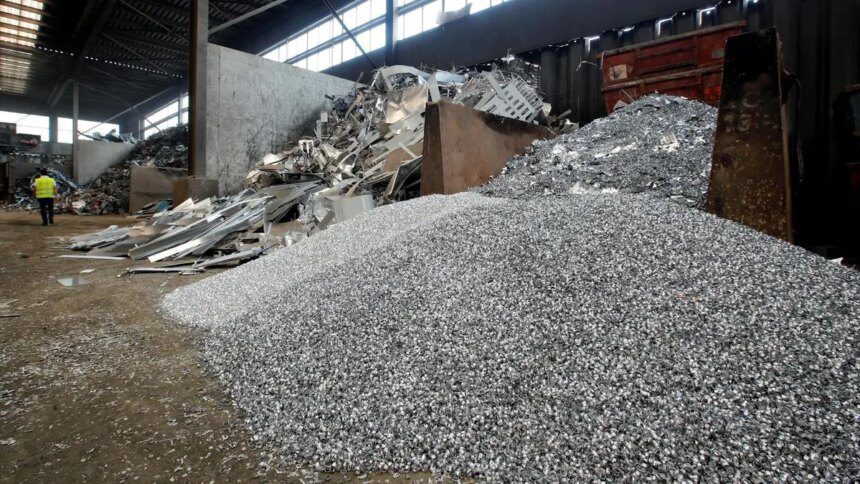

A prominent industry group representing small and mid-sized firms engaged in recycling metals, plastics, e-waste, rubber, and glass has reached out to the Prime Minister’s Office (PMO) to request the removal of a 2.5% import tax on aluminium scrap. This appeal is amid rising costs and increased demand for the material, as noted in a letter reviewed by Reuters.
India is a significant global importer of aluminium scrap and currently levies a tariff on this product, which is sourced heavily from the European Union, the United States, and the Middle East. Industry officials indicated that planned export restrictions from the EU and disruptions caused by ongoing U.S.-Israeli tensions with Iran have exacerbated supply shortages.
Aluminium scrap is primarily utilized in the automotive sector and in construction, foils, and cables. The Material Recycling Association of India (MRAI) emphasized in a letter dated March 26 to the PMO that micro, small, and medium enterprises (MSMEs) rely on high-quality imported scrap to fulfill technical requirements. However, the 2.5% basic customs duty inflates input costs and strains working capital, thereby limiting the access of these enterprises to reliable recycled materials.
The MRAI’s letter argued that eliminating the import tax would lower costs and enhance competitiveness for MSMEs. The secondary sector, which depends on scrap, accounts for nearly 40% of India’s total aluminium supply—approximately 2.2 million metric tons annually—while sourcing 85% of its scrap needs through imports.
A report released last year by the mines ministry attributed India’s significant reliance on imported scrap to the insufficient availability of domestic scrap. Moreover, high levels of scrap imports pose challenges for primary aluminium producers due to a surge in shipments in recent years.
Despite these challenges, the MRAI asserted that lifting the import tariff would foster downstream manufacturing and would not adversely affect primary producers. Major primary aluminium manufacturers in India include Vedanta, Hindalco Industries, and the state-owned National Aluminium.
Scrap plays a crucial role in the industry’s decarbonization efforts, as recycling aluminium consumes 95% less energy than producing metal from mined bauxite. Looking ahead, commodities consultancy BigMint projected that with aluminium consumption expected to reach 8.5-9.0 million metric tons by FY30, and in light of new recycled content mandates, imports will remain essential unless domestic scrap collection and urban mining significantly improve.
Published on April 21, 2026.