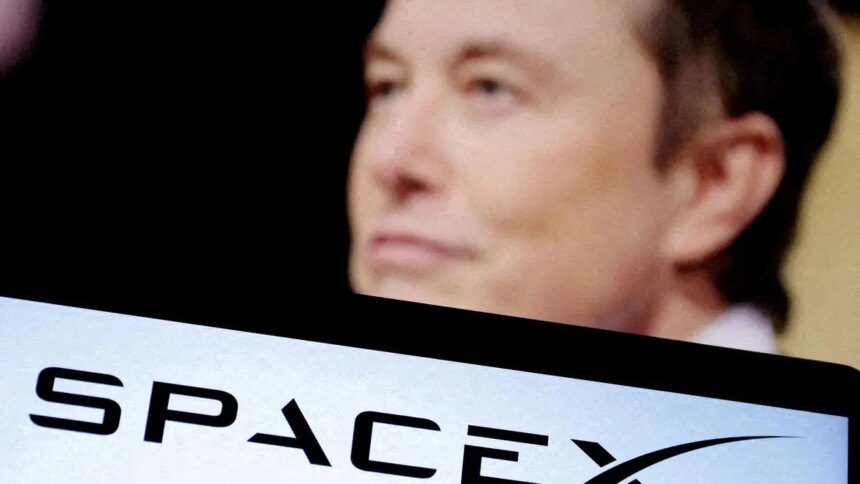

Elon Musk’s space exploration company, SpaceX, has submitted confidential documents in preparation for a public offering on the US NASDAQ stock exchange. The company, overseen by the world’s wealthiest individual, is anticipating a total valuation of $2 trillion. Musk intends to sell a small percentage of the company, seeking to raise $75 billion from public investors, which would set the record for the largest IPO in history.
SpaceX has ambitious goals of making humanity multiplanetary, a vision that aligns with Musk’s long-term objectives since founding the company in 2002. The firm has revolutionized the industry by significantly cutting launch costs through the reuse of rocket components, reducing them to about 5% of early 2000s prices. To date, SpaceX claims approximately 600 successful rocket landings.
Despite its long-term aspirations, around 50–80% of SpaceX’s revenue currently stems from Starlink, a satellite internet service with over 10 million users globally. In February 2026, SpaceX completed a merger with xAI, the AI startup responsible for the Grok chatbot. This merger, valued at $250 billion for xAI and $1 trillion for SpaceX, created a combined entity worth $1.25 trillion and set the groundwork for the IPO.
Musk suggested that the proceeds from the IPO would fund the launch of up to one million data center satellites, aimed at utilizing solar energy to alleviate constraints faced by terrestrial power and water resources.
SpaceX may be the first of three major IPOs this year, along with potential listings from AI firms Anthropic and OpenAI. If the IPO moves ahead, the $75 billion target would represent only 3.75% of SpaceX’s overall value, meaning that the majority of the company would still be privately owned, retaining control with Musk and a select group of early investors. This low “free float” is significant since companies with such limited public shares typically aren’t eligible for major stock indices like the S&P 500 or NASDAQ 100.
To facilitate SpaceX’s potential inclusion in these indices, NASDAQ has adjusted its requirements, eliminating the usual 10% minimum free float threshold and shortening the seasoning period for newly listed companies from three months to just 15 trading days.
This development holds considerable implications for investors in passive funds, including exchange-traded funds (ETFs) that track the NASDAQ 100, which currently manage over $600 billion in assets. Once SpaceX is added to the index, these funds would automatically include the stock, raising concerns about potential price volatility due to the rapid integration of such a large company.
As SpaceX seeks a valuation of $2 trillion while reporting only $15 billion in revenue last year, questions arise about the sustainability of this high asking price. In comparison, Tesla, known as one of the priciest stocks globally, would require just 13 years of revenue to match its valuation, making SpaceX’s valuation tenfold higher.
Additionally, other key market indices, such as the S&P 500 and FTSE Russell, are also modifying their rules in anticipation of accommodating large, newly public companies. The S&P 500 draws more than $16 trillion from passive funds, so any changes to allow SpaceX’s entry could trigger even larger automatic buying.
Musk’s ventures have historically attracted interest from retail investors, and SpaceX appears to be following suit. The company plans to offer up to 30% of its shares to individual investors, but the lofty valuation prompts a need for caution. When powerful companies shape the rules to their advantage, careful consideration becomes increasingly essential. To maintain market integrity, it is vital for all participants to operate under the same set of rules.
Published on April 17, 2026.