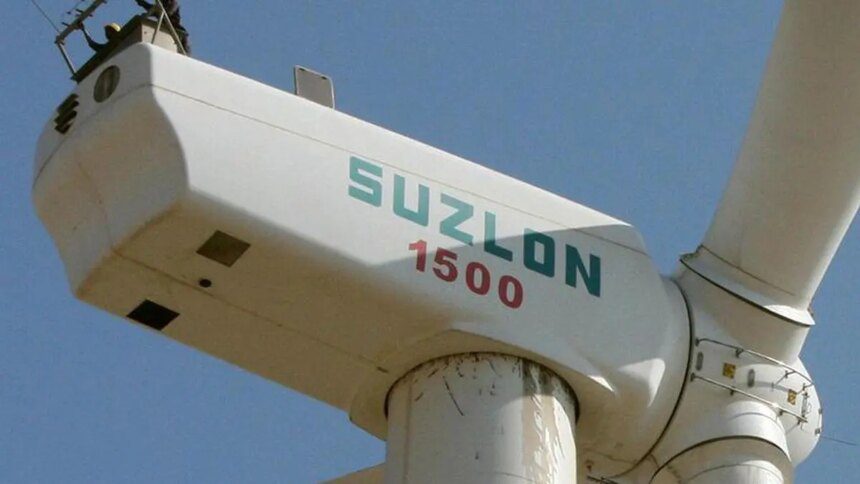

Shares of Suzlon Energy rose 3.34 percent to ₹51.93 on the NSE by 10:35 AM on Friday, outperforming broader markets, with an intraday high of ₹52.16 compared to the previous close of ₹50.25. The wind turbine manufacturer’s stock has surged 25.81 percent over the past month and 14.56 percent in the last week, significantly exceeding the performance of the Nifty Midcap 50 index, which gained 8.33 percent and 3.09 percent in those same periods. The traded volume reached 921.78 lakh shares, with a turnover of ₹475.45 crore, indicating strong market participation. Suzlon’s total market capitalization stands at ₹71,261 crore.
In a report dated April 15, JM Financial maintained a BUY rating on the stock, projecting a 12-month price target of ₹64, representing a potential upside of approximately 23 percent from current levels. The note, titled “Unintended Beneficiary of Middle East Crisis,” argues that a reduction in gas-based power generation in India—from 8-12 GW down to just 2 GW due to the conflict in the Middle East—has created an evening power supply deficit of around 8 GW. This situation, the brokerage contends, highlights the case for accelerated wind energy development, as wind generation typically peaks during evening hours.
JM Financial anticipates that India could commission 8-10 GW of wind capacity by FY27, compared to a quarterly run rate of 1.4-1.5 GW, with the Ministry of Power targeting 2.4 GW in the first quarter of FY27 alone. For Suzlon specifically, the brokerage expects a significant improvement in commissioning during the first half of FY27, having observed a growing gap between turbine deliveries and actual installations, with 776 MW of turbines erected but pending commissioning as of December 2025.
The brokerage forecasts Suzlon’s net sales to rise to ₹2,242 crore in FY27 and ₹2,510 crore in FY28, with diluted earnings per share projected to increase to ₹2.3 and ₹2.6, respectively. Despite a decline of 5.72 percent over the past year, Suzlon’s three-year and five-year returns of 537 percent and 1,090 percent are among the strongest in the midcap segment.
Published on April 17, 2026.