
For years, the enterprise cloud story was told as a story of movement. Workloads moved out of legacy systems, applications became more elastic, and infrastructure became easier to provision and scale. But that framing is no longer enough.
What emerged from the discussion was a sharper proposition: cloud is no longer just the digital warehouse of the enterprise; it is becoming its intelligent backbone.
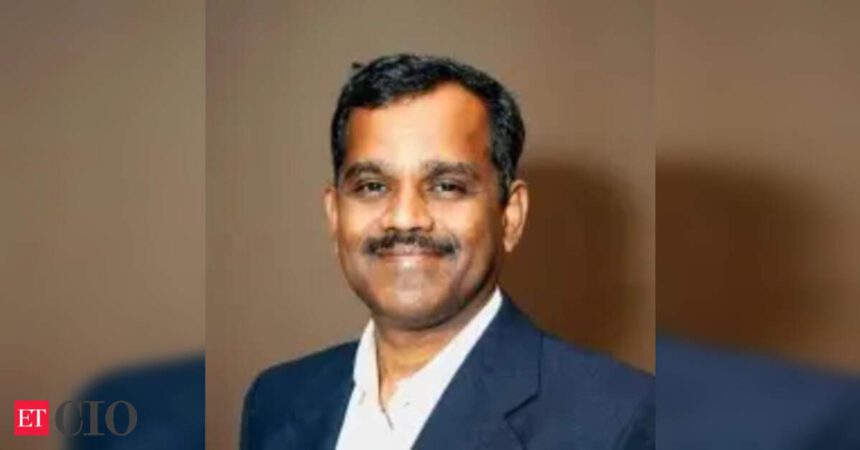
“That shift changes everything. It moves cloud out of the narrow lane of infrastructure management and places it firmly at the heart of enterprise strategy. Cloud is now where data converges, where models are trained, where automation is operationalized, and where real-time decisions increasingly take shape,” Sampath Manickam, CTO, NSE India, said.
From scale to intelligenceDrawing from his experience of building at scale in consumer digital ecosystems and now operating inside one of India’s most mission-critical environments, the speaker illustrated how cloud has evolved from a hosting layer into a decision-making layer.
“In consumer businesses, cloud enables organizations to manage millions of concurrent users, unpredictable traffic spikes, and highly personalized digital experiences. In high-stakes environments, the demand is even more unforgiving: resilience is non-negotiable, latency is critical, and trust is the true measure of performance,” Manickam added.
This is what gives the current cloud moment its strategic importance. The conversation is no longer about whether the cloud can support growth. It is about whether the cloud can support intelligence, speed, and certainty at enterprise scale.Why cloud maturity is not the same as cloud absolutism
One of the most nuanced insights from the session was that maturity in enterprise architecture does not always mean moving everything to the cloud.
“In certain cases, organizations may even choose to bring select workloads back on-premises when latency, control, or operational certainty demand it. That is not a reversal. It is a sign that the enterprise cloud journey is becoming more disciplined and more context-driven,” Manickam highlighted.
The future will not be defined by ideology or by loyalty to a single model. It will be shaped by fit.
Public cloud, private cloud, multicloud, and hybrid cloud are no longer just fashionable terms in technology conversations. They are strategic choices that must align with workload sensitivity, regulatory expectations, business continuity needs, and performance demands. The real question is no longer, “How much cloud have we adopted?” It is, “What belongs where, and why?”
A
I is raising the stakes for cloud strategy
As AI moves from pilot projects to enterprise expectation, cloud has taken on a more consequential role. It is the environment in which AI ambitions either scale or stall.
Without the right cloud foundation, AI remains fragmented — trapped in experimentation, disconnected from workflows, and difficult to operationalize securely. With the right foundation, the cloud becomes the layer that connects data, compute, automation, and governance.
That is why the cloud conversation today cannot be separated from questions of security, accountability, resilience, and ethics. Speed alone is no longer enough. Enterprises now need cloud environments that are intelligent, trustworthy, and built for sustained transformation.
Th
e next mandate: architect trust, not just technology
Perhaps the most powerful idea from the stage was that technology is not ultimately about machines and algorithms. It is about people. It is about enabling employees, entrepreneurs, and decision-makers to move faster, act with greater confidence, and create meaningful impact.
That is what makes this cloud shift so significant.
Cloud is no longer simply where systems run. It is where enterprises learn, respond, predict, and compete. And that means the next leadership mandate is not just to modernize infrastructure, but to architect confidence — to build digital environments where intelligence flows securely, governance keeps pace with innovation, and trust remains intact.
Cloud, in that sense, is no longer just a destination.
It is becoming the fabric through which the modern enterprise thinks.
Disclaimer: The views expressed are solely those of the speaker and have been taken from the ETCIO Cloud Summit 2026. ETCIO does not necessarily subscribe to them.
(With inputs from Swati Sengupta).