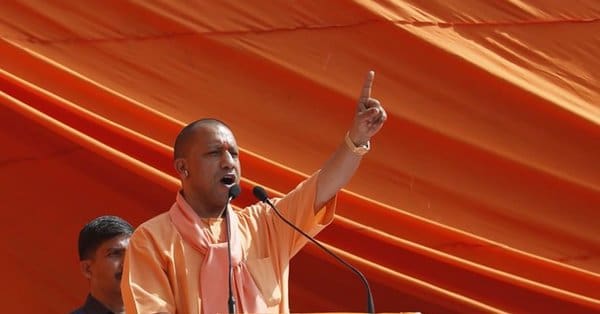
Uttar Pradesh Chief Minister Yogi Adityanath’s comments in the state Assembly have sparked significant backlash. During a heated discussion regarding the alleged misuse of codeine-based cough syrup, Adityanath stated he would not leave his opponents “even fit for Fatiha to be read.”
Al-Fatiḥa, the opening chapter of the Quran, consists of seven verses focused on prayer for guidance and mercy. Adityanath directed his remarks towards the opposition, particularly the Samajwadi Party, asserting, “Hamari sarkaaar ki kaaravaai antim charan tak pauchegi, tab tak aap mein se bahut saare log Fatiha padhne jaayenge, vahaan lekin hum aapko Fatiha padhne layak bhi nahin chhodenge,” which translates to: “When the government’s action reaches its final stage, many will go to read Fatiha, but we will not leave you ‘even fit’ for such prayers.”
Fatiha is recited during funerary rites among Muslims. The remarks were met with immediate criticism from the opposition. Leader of the Opposition Mata Prasad Pandey condemned Adityanath’s language as “unbecoming of a person holding a constitutional position.” He noted that while the opposition posed questions regarding governance and accountability, the Chief Minister’s response leaned toward threats and religious invocations rather than addressing the issues at hand.
Pandey further criticized the intertwining of a religious practice with political discourse, saying it diminishes the dignity of the Assembly. He expressed concern that such remarks foster fear and polarization, discouraging democratic dialogue and legitimate inquiries from the opposition. In protest, Pandey led Samajwadi Party MLAs in a walkout from the Assembly.
Areeb Uddin, a legal practitioner based in Lucknow, stated, “A sitting Chief Minister suggesting that people will not be left worthy of last rites crosses a line.” Uddin emphasized that the use of religiously charged language to threaten the right to last rites undermines constitutional protections, specifically Article 25, which guarantees the freedom to perform religious rites, and Article 21, which upholds the right to life and dignity, including dignified disposal of a body after death.
Uddin described the language employed by the Chief Minister as “arbitrary, discriminatory, and deeply offensive” to the secular and egalitarian principles of the Constitution. He concluded that a constitutional figure must exercise caution with their words, as statements that invoke death and religious identity can legitimize hostility rather than uphold law and order.
This exchange highlights the increasingly contentious atmosphere in Uttar Pradesh’s political landscape, where the lines between governance, religious rhetoric, and civil rights remain blurred.
Tags: UP CM faces objections over ‘Fatiha’ reference during assembly exchange Extract 5 SEO-friendly keywords as tags. Output only keywords, comma separated.
Hashtags: #faces #objections #Fatiha #reference #assembly #exchange