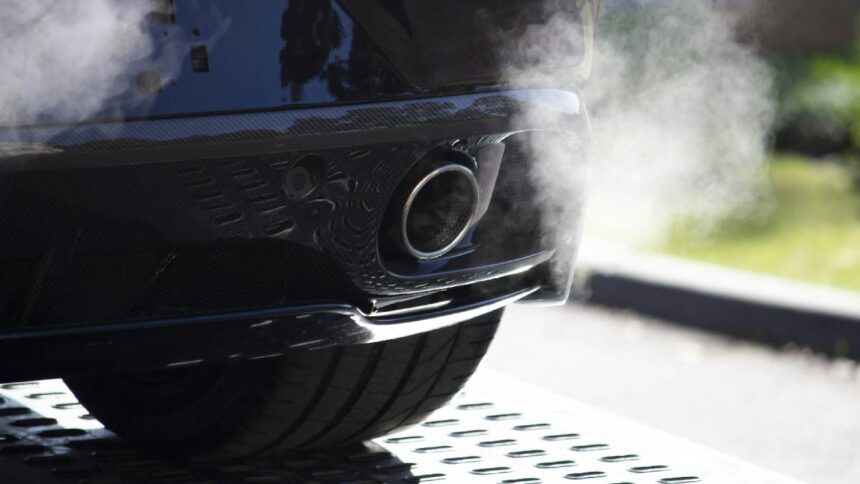

European Union officials moved on Tuesday to ease their 2035 ban on the sale of new cars with internal combustion engines (ICE), responding to pressure from member governments and automakers. These groups argued that the industry needed more flexibility in reducing carbon dioxide emissions and meeting the bloc’s ambitious climate goals.
The proposed policy shift
The proposal from the EU’s executive commission would modify the existing 2023 legislation. This law currently requires the average emissions for new cars to be zero—a 100 per cent reduction from 2021 levels—by 2035. The new plan would instead require a 90 per cent emissions reduction. In practical terms, while this means most new cars would still need to be battery-only, it would leave room for the continued sale of some ICE vehicles.
To compensate for the added emissions, automakers would be required to use:
- European steel produced with lower-carbon methods.
- Climate-neutral e-fuels (made from renewable electricity and captured carbon dioxide).
- Biofuels (derived from plants).
EU officials maintain that this less stringent limit will not hinder the overall progress toward making the 27-country bloc’s economy climate-neutral by 2050. This goal involves producing only as much CO2 (the primary greenhouse gas) as can be naturally absorbed or mitigated by abatement methods like carbon storage.
Implications for automakers and hybrids
This less stringent limit would allow automakers to continue selling some plug-in hybrid vehicles. These cars, which combine electric and internal combustion engines, can use the combustion engine to recharge the battery, eliminating the need to find a public charging station.
The new limit proposal was accompanied by complementary measures aimed at promoting European battery production and the manufacturing of small electric cars.
Industry concerns and global context
The policy shift, which still requires approval from member governments and the EU parliament, follows appeals from major car manufacturers and key governments like Germany and Italy. These nations host major auto manufacturers and were concerned about the economic impact on an industry that remains a significant employer.
Industry representatives contend that the charging infrastructure is not being built quickly enough to convince consumers to switch from gasoline and diesel models. Other factors are also slowing the growth in demand for electric vehicles (EVs), including:
- The cancellation of purchase subsidies (e.g., by the German government).
- Higher prices for European-made EVs.
- Pressure from increasing sales of inexpensive Chinese EVs.
- A car market that remains smaller than pre-pandemic levels.
Despite these challenges, sales of battery-only cars in Europe rose by 26 per cent for the first ten months of this year compared to the same period last year, reaching 16 per cent of all new car sales.
Global reactions
Both the EU and the U.S. are adopting EVs more slowly than China, where battery vehicles constituted 34 per cent of the market in the third quarter. China’s EV growth has been driven by state assistance and fierce competition leading to affordable vehicles.
In the U.S., President Donald Trump announced a plan to significantly reduce previous federal fuel economy requirements. The suggested standards, if finalized in 2026, would set the industry’s fleet-wide average for light-duty vehicles at 34.5 miles per gallon in the 2031 model year, a significant reduction from the former President Joe Biden’s previously set, more stringent target of about 50.4 miles per gallon.
Industry leaders have applauded Trump’s proposed rule change, which aligns with his agenda to support the oil and gas sector and other measures that prolong the sale of ICE vehicles, such as relaxing tailpipe emissions rules and eliminating EV incentives.
ALSO READ: 2026 Auto Outlook: Kia to launch new models, Mahindra to focus on facelifts