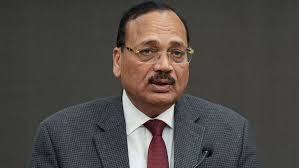
A coalition comprising former judges, senior advocates, scholars, and civil rights activists has addressed an open letter to Chief Justice of India Surya Kant, condemning what they term “unconscionable remarks” made by a Supreme Court bench during a hearing on December 2, 2025, regarding the purported custodial disappearance of Rohingya refugees.
The Supreme Court, during the proceedings, questioned how individuals who enter India illegally could claim the right to due legal process concerning their removal. This inquiry arose in response to a Public Interest Litigation (PIL) alleging that several Rohingya individuals were deported without adhering to established procedures.
CJI Surya Kant challenged the petitioner’s counsel on how those who “cross a fenced border, dig a tunnel, and enter India illegally” could demand access to legal protections such as notices, food, and shelter. He questioned whether the situation warranted an expansive interpretation of the law, especially given allegations that five Rohingya individuals had been deported without following due process.
The bench also probed whether the Indian government had ever acknowledged these individuals’ refugee status. “Where is the order by the Government of India declaring them as refugees? ‘Refugee’ is a well-defined legal term, and there is a prescribed authority to declare it,” the CJI noted.
The letter signed by members of the legal community asserts that comments from the bench were “contrary to core constitutional values” and had the potential to “dehumanize Rohingya refugees,” whose equal humanity and rights are protected by the Constitution, national laws, and international law.
Dr. Rita Manchanda, a renowned scholar and human rights activist specializing in conflict and displacement issues, filed the plea in question. The signatories highlighted that Dr. Manchanda has a long history of working with “vulnerable and marginalized groups, including forcibly displaced persons,” emphasizing that such sensitive matters require careful consideration, not remarks that might foster discrimination.
Expressing alarm over the bench’s characterization of refugees as “intruders illegally entering India,” and comparing them to individuals “who dig tunnels to enter illegally,” the letter voiced concern about comments questioning the entitlement of such individuals to “food, shelter, and education,” alongside remarks suggesting that they should merely be spared “third degree measures” in custody.
“These statements,” the letter asserted, “further dehumanize those fleeing genocidal persecution and erode the judiciary’s moral authority.” The signatories emphasized that such rhetoric has a cascading impact on lower courts and governmental authorities.
Pointing out that the Rohingya have been recognized by the United Nations as “the most persecuted minority in the world,” the letter noted that those arriving in India are escaping “ethnic cleansing and genocide by the armed forces” in Myanmar. The authors reminded CJI Kant that India has historically offered refuge to those escaping persecution, reiterating that the Rohingya, like any other individuals in India, are constitutionally entitled to life and liberty.
Quoting a precedent from the Supreme Court in NHRC v. State of Arunachal Pradesh (1996), the letter stated, “The State is bound to protect the life and liberty of every human being, be he a citizen or otherwise,” emphasizing that recent remarks ran counter to this foundational principle.
Addressing the Chief Justice, the signatories argued that as head of the judiciary, Kant is not merely a legal functionary but serves as the custodian of the rights of the marginalized. They warned that informal comments made by the Court carry significant weight both in court and within public perception.
The letter cautioned that invoking domestic poverty to justify denying basic entitlements to refugees risks setting a “dangerous precedent” and violates principles of constitutional justice. It stated that the right to life under Article 21 applies equally to all individuals, including refugees, asserting that such protections extend beyond mere safeguards against torture.
Additionally, the signatories highlighted the distinct legal nature of refugee status compared to illegal immigration, explaining that “refugee status determination is declaratory,” meaning individuals are acknowledged as refugees not due to recognition, but because they inherently fulfill the criteria.
They pointed out that deporting or detaining individuals without proper assessment of their claims violates the non-refoulement principle, already recognized as part of Article 21 by courts. The letter also referenced India’s established Standard Operating Procedure for refugees, which aligns domestic practice with international standards.
Citing India’s historical commitment to providing refuge, the authors mentioned previous instances of protection for Tibetan and Sri Lankan Tamil refugees, as well as the large-scale shelter offered to refugees from East Pakistan in 1970-71. The letter also referenced the controversial Citizenship Amendment Act, which differentiates refugees from migrants but restricts recognition to non-Muslim minorities.
Concluding, the signatories urged the Court to remain a “refuge for the vulnerable,” emphasizing that remarks undermining the dignity of refugees could reasonably lead to public apprehension of prejudice and erode confidence in the judiciary. They called on CJI Kant to reaffirm a commitment to constitutional morality centered on human dignity for everyone, regardless of origin.
The letter was signed by prominent figures, including Justice A.P. Shah, former Chief Justice of the Delhi High Court; Justice K. Chandru, former Judge of the Madras High Court; and senior advocates and human rights activists from various organizations advocating for judicial accountability and human rights protections.
The article was originally published by Maktoob Media.
Tags: Legal experts slam CJI Surya Kant’s remarks on Rohingyas as “unconscionable, dehumanising” Extract 5 SEO-friendly keywords as tags. Output only keywords, comma separated.
Hashtags: #Legal #experts #slam #CJI #Surya #Kants #remarks #Rohingyas #unconscionable #dehumanising