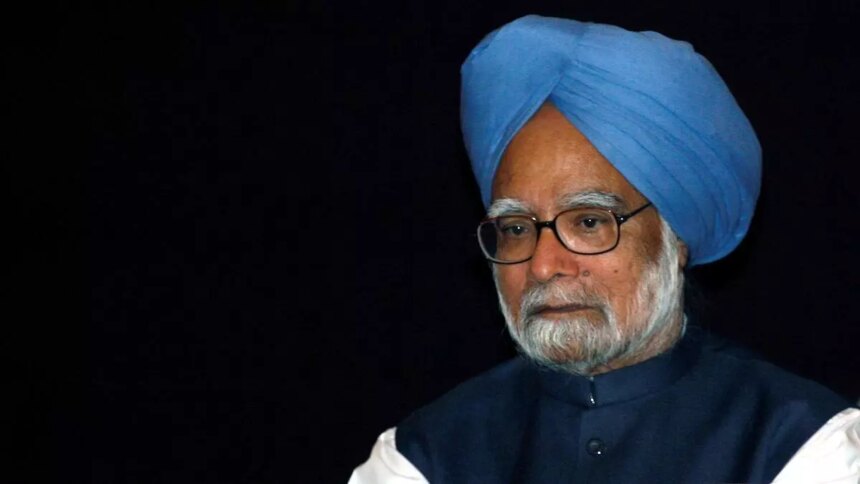

Manmohan Singh passed away on December 26 at the All India Institute of Medical Sciences (AIIMS) in Delhi, closing a remarkable chapter in public service that profoundly influenced India’s development as a modern, liberal democracy. A distinguished technocrat, Singh progressed from esteemed academic circles to crucial policy-making positions, ultimately entering the often tumultuous domain of politics. His extensive career and the significant impact he had on public policy in India remain unmatched.
India will forever remember its 14th Prime Minister for his integrity and steadfast dedication to the principles he cherished. This integrity distinguished him from many of his contemporaries; he managed to rise above the murky waters of politics. Although he was not directly elected as Prime Minister in 2004, Singh’s leadership earned the confidence of even those disillusioned with the political system, leading the Congress party to secure a greater majority in the 2009 general elections. His honesty, scholarly excellence, decency, and politeness garnered him respect, particularly among the urban middle class.
Beneath his gentle demeanor was a firm resolve and pragmatism, evident in his 25 years of service from the 1970s to 1991, during which he collaborated with influential leaders like Indira Gandhi, Morarji Desai, and Rajiv Gandhi as a key architect of India’s economic strategies. Despite being a close adviser to Indira Gandhi during the Emergency, Morarji Desai appointed him as Secretary in the Department of Economic Affairs after the Congress party’s defeat in the general elections.
Desai, despite dismissing several officers, retained Singh, even though his entry into the bureaucracy had been lateral as a technocrat. Reflecting on the Emergency years, Singh shared with his daughter, Daman Singh, that while there was an emphasis on punctuality and discipline during that time, the overall atmosphere was dominated by fear and arbitrary detentions.
Singh navigated these turbulent times due to his competence and an impressive ability to disengage when necessary—a skill he demonstrated throughout his career, including his time as Prime Minister. He once considered resigning as an adviser to the commerce ministry during Indira Gandhi’s administration over a proposal he disagreed with, but was persuaded to stay on after intervention from the Prime Minister’s Office.
As Governor of the Reserve Bank of India (RBI), a role he was appointed to during Indira Gandhi’s time, Singh had conflicts with Finance Minister Pranab Mukherjee. When the government sought to grant a license to the Bank of Credit and Commerce International (BCCI), Singh opposed the move. His resignation was considered, yet once again, he was convinced to reconsider.
He was fully aware of his position’s limitations within the political hierarchy. Singh remarked that the RBI Governor was not superior to the Finance Minister; if the Finance Minister insisted on a particular decision, the Governor would typically have no choice unless willing to resign. Singh ultimately left the RBI after less than three years, although Mukherjee later denied influence over that decision.
With a solid belief in his value, Singh accepted the role of Finance Minister during PV Narasimha Rao’s administration, a pivotal time when he implemented reforms that opened India’s economy to the global market. Faced with a severe economic crisis characterized by dwindling foreign reserves and a looming balance of payments issue, he was surprisingly entrusted with the task of steering the economy back to stability. Singh himself confessed to his astonishment at being chosen for such a crucial role, given Rao’s previous hesitance about economic reform.
As Singh transitioned from technocrat to politician, he was elected to the Rajya Sabha in 1991 and again in 1995. In the wake of Congress losing the general election in 1996, he contemplated running for a general seat in South Delhi in 1999, but faced internal resistance from local Congress leaders. Despite the challenges, including limited resources, Singh managed to campaign, even borrowing funds from friends.
In an anecdote shared by journalist Khushwant Singh, he recounted how Singh’s son-in-law approached him for a loan to fund taxi rentals for campaigning. After the election, Singh returned the money, having not used it, illustrating his remarkable integrity—an example of the honor that eventually elevated him to the nation’s highest office.
Though he lost that election, Singh remained a Rajya Sabha member and became the Leader of the Opposition in 2004. When Sonia Gandhi declined the Prime Minister position due to significant opposition, Singh emerged as the logical choice. He was not a seasoned political operative capable of challenging her authority but possessed impeccable credentials that aligned with the redistributive justice and rights-based policies favored by the Left parties supportive of the government.
During his tenure, Singh and Sonia Gandhi successfully implemented landmark initiatives, including the Mahatma Gandhi National Rural Employment Guarantee Act, the Right to Education Act, and the Right to Information Act. His economic measures not only helped navigate the aftermath of the global economic downturn but also aided the Congress in regaining power in 2009. However, the momentum of reforms slowed in his second term, primarily due to pressures from coalition partners.
Singh’s health issues, coupled with those faced by Sonia Gandhi, began to unravel the government during his second term. Congressman Mani Shankar Aiyar posited that had Pranab Mukherjee been Prime Minister instead of Singh, the UPA II might not have faced such disarray. Aiyar speculated that if Singh had been a candidate for the Presidential position in 2012, a more active PM with the capacity to address political crises effectively could have been chosen.
Despite criticisms for not acting decisively during various political scandals, Singh never positioned himself as a conventional politician. His technocratic approach sometimes left him ill-prepared for the intricacies of political maneuvering. Nevertheless, he maintained the belief that history would assess him fairly. The widespread expressions of sorrow from across political lines and the public indicate that he was indeed right in that belief.