“I’ve tried different brands of hearing aids, and they’re good, but they’re not this good,” Martin stated in a Zoom interview about his experience with Fortell’s hearing aids. After testing them during a street demonstration in Soho, he was pleased with their performance while dining with his wife and daughter at a restaurant, where the device’s efficacy was notable. The defining moment came at a cocktail party, where he initially struggled to hear conversations with his old devices. “I realized I can’t understand any of them, and I go, wait, I have these new hearing aids. I went downstairs, put them in, came back, and I could hear everyone,” he recalled. Now wearing them constantly, Martin even made a joke about hearing aids during the 50th anniversary special of Saturday Night Live. “I don’t really think about the way it used to be,” he reflected. “I used to dread going to a restaurant, and now I don’t.” His friend Balaban, who also participated in the beta test, expressed similar satisfaction: “This is a significant improvement over the absurdly pricey devices I’d been using.”
Despite the enthusiasm around Fortell’s product, there remains a significant concern regarding access. “It’s a sad fact that some Medicare and many health insurance plans do not cover hearing aids, a policy that dooms millions to an aural bardo of conversational exclusion,” the article noted.
De Jonge, Fortell’s founder, mentioned that although several notable individuals are involved with the company, many of them remain private. The limited initial availability of beta units means that influential figures have already been put on a waiting list. Balaban’s wife, Lynn Grossman, shared that at a recent large dinner, many guests were left curious about Fortell’s hearing aids after hearing her husband converse effortlessly with others while she struggled to follow the discussions.
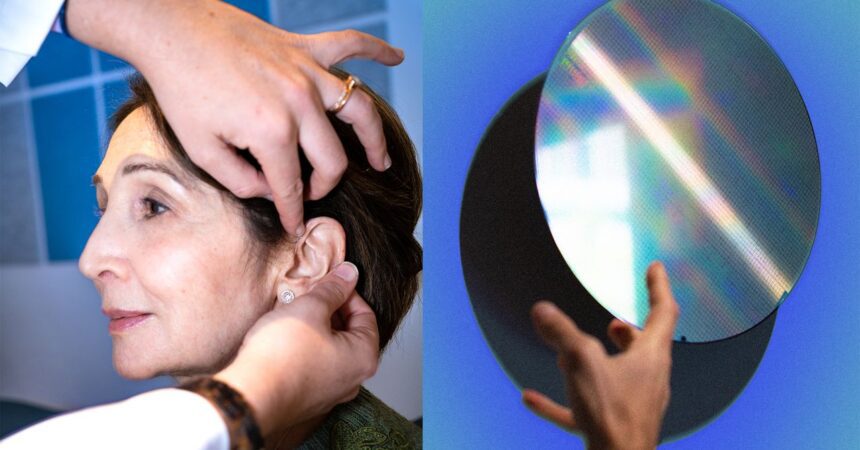
Now that the product has launched, Fortell will offer its hearing aids through a single clinic located on Manhattan’s Park Avenue, designed to emulate a luxurious retail environment akin to Apple’s approach. In the clinic, customers can view the devices alongside a silicon wafer displaying the custom chip circuitry. To ensure a smooth experience, the clinic’s staff of four audiologists will manage a limited number of clients each week. Supply constraints will continue as the company ramps up production.
However, de Jonge’s aim to widen access to hearing aids could face challenges. When asked about plans for broader distribution, he provided vague answers, raising questions about scalability. Nonetheless, Fortell has intentionally priced their premium hearing aids at $6,800, which is somewhat lower than other medically prescribed devices. This pricing structure includes the cost of fitting and support from audiologists. Despite being a step toward wider availability, the price tag still restricts access for many. The lack of coverage from Medicare and numerous health insurance plans exacerbates this issue, leaving many without essential auditory support, which is important for maintaining social connections and cognitive health.
Future exploration into more affordable over-the-counter hearing aids is uncertain, particularly with the recent regulatory changes initiated during the Biden administration, which have allowed consumer electronics brands to enter this market. While products like Apple’s AirPods Pro 2 can assist those with hearing loss, they don’t match the effectiveness and tailored support provided by high-end devices. The Fortell approach requires ongoing adjustment and tuning, making the comprehensive support a priority for at least the coming year. Expansion plans include opening additional clinics in select cities, with the potential to allow wider sales of the technology remaining a future consideration.